Vasan Medicals
In the world of hair removal, two technologies stand out: diode laser and Alexandrite laser. Buyers often face the dilemma of choosing between diode laser vs Alexandrite laser. Each method has its unique benefits and drawbacks, making the decision challenging.
Diode lasers are known for their versatility and efficacy on different skin types. They operate on longer wavelengths, which penetrate deeper into the skin, making them suitable for darker skin tones. On the other hand, Alexandrite lasers are often praised for their speed and effectiveness on lighter skin. They offer quicker treatment sessions, appealing to those looking for efficiency.
Understanding these technologies requires careful consideration. The diode laser vs Alexandrite laser debate goes beyond mere effectiveness; it includes safety, comfort, and long-term results. Potential buyers should consider their skin type, hair color, and personal pain tolerance. Both options have their merits, yet, no one size fits all. This consultation can ensure the best choice for individual needs.
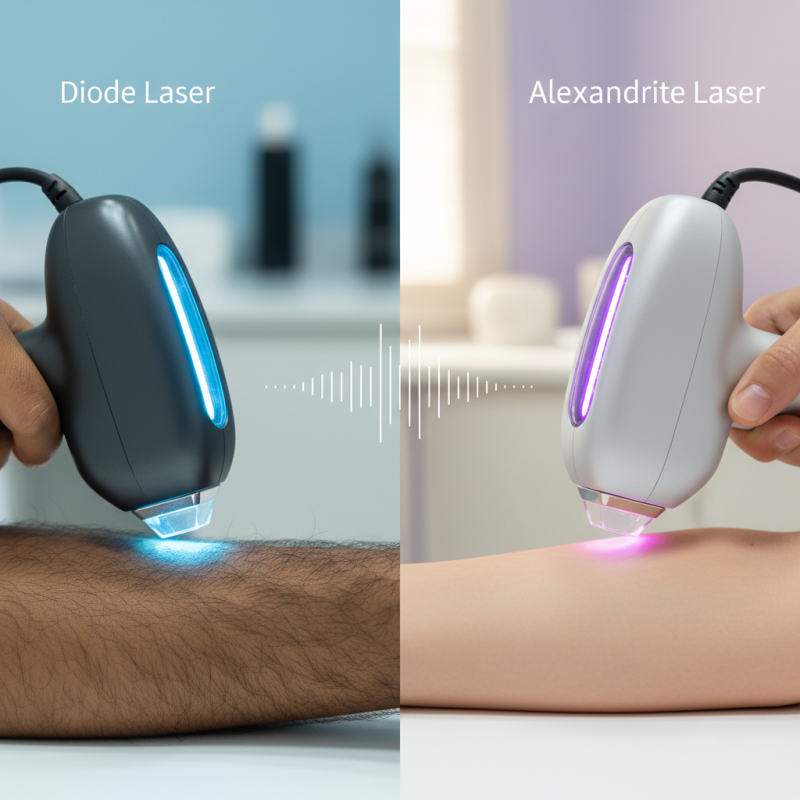
Diode lasers have gained popularity in aesthetic treatments due to their versatility and effectiveness. These lasers emit light which is absorbed by the pigment in hair or skin. The technology allows for precise targeting of hair follicles while minimizing damage to the surrounding skin. This precision makes diode lasers ideal for various skin types, offering a broader range of applications in cosmetic procedures.
One notable feature of diode lasers is their cooling mechanism. This cooling process enhances patient comfort during treatments. However, the results can vary. Factors such as skin type, hair color, and individual pain tolerance play a role. It’s crucial for practitioners to assess these variables before treatment. Users should ask about the practitioner’s experience and training with diode lasers. This knowledge can significantly impact the outcome.
Patients often report a mix of experiences with diode lasers. Some enjoy smoother skin after treatments, while others may face unexpected side effects. Common issues include skin irritation or pigmentation changes. These concerns can be disheartening, emphasizing the importance of realistic expectations. Engaging with a licensed professional can provide valuable insights, helping clients navigate their options effectively.
Alexandrite lasers are known for their versatility in various applications, especially in aesthetic practices. These lasers emit light at a specific wavelength that is highly effective for hair removal, skin rejuvenation, and tattoo removal. The ability to target different skin types makes Alexandrite lasers popular in dermatology clinics.
The mechanism of Alexandrite lasers involves the absorption of light by melanin in hair follicles. This leads to effective hair reduction while minimizing damage to surrounding skin. However, results can vary based on individual skin tones and hair types. Not everyone may experience optimal outcomes. Patients sometimes report discomfort during procedures, urging practitioners to consider pain management strategies.
Additionally, Alexandrite lasers require skilled operators. Improper use can lead to skin irritation or uneven results. Continuous training and adherence to safety protocols are essential for practitioners to ensure patient safety and satisfaction. Feedback from patients helps refine techniques and enhance effectiveness, illustrating the need for ongoing reflection and improvement in treatment approaches.
| Feature | Diode Laser | Alexandrite Laser |
|---|---|---|
| Wavelength | 800-950 nm | 720-800 nm |
| Hair Removal Efficacy | Effective for all skin types | Best for light to olive skin |
| Cooling Mechanism | Integrated cooling systems | Cryogen spray or contact cooling |
| Treatment Speed | Rapid sessions | Moderate sessions |
| Pain Level | Low to Moderate | Moderate to High |
| FDA Approval | Yes | Yes |
| Cost per Treatment | $150 - $300 | $200 - $400 |
| Common Applications | Hair removal, acne treatments | Hair removal, tattoo removal, pigmented lesions |
When considering hair removal options, diode and Alexandrite lasers stand out. Diode lasers are often favored for their wavelength of 800-810 nm, which is effective for various skin types. Studies show that they provide significant hair reduction after just a few sessions. On the other hand, Alexandrite lasers operate at 755 nm, making them suitable for lighter skin tones. This laser can target melanin more effectively, enhancing results in a shorter time.
However, effectiveness varies. A report from the American Society for Laser Medicine and Surgery found that diode lasers achieve approximately 70% hair reduction after 6-8 sessions. In contrast, Alexandrite systems report up to 90% hair reduction with well-documented sessions. Yet, individual experiences may differ due to skin type and hair color.
Patients often encounter discomfort, regardless of the laser type. Diode lasers have a cooling mechanism to alleviate pain, yet some still report sensitivity. Alexandrite lasers can be less painful but may require more skin testing. Understanding these nuances is crucial for making an informed decision. Personal consultation with a qualified professional remains essential for anyone considering these treatments.
When considering the cost of diode lasers versus Alexandrite lasers, several factors must be evaluated. Diode lasers often have lower initial costs. They also require less maintenance. On the other hand, Alexandrite lasers can lead to higher upfront expenses. However, their efficiency in hair removal makes them a valuable investment over time.
Tips for buyers: Analyze total costs. Don't just focus on initial prices. Consider maintenance and operational costs too. Some buyers may overlook these ongoing expenses.
In addition, understand the treatment areas. Diode lasers are effective for various skin types. Alexandrite lasers excel in lighter skin tones. Consider your specific needs. This will guide your decision and budget accordingly. Weigh the long-term advantages against immediate costs for the best value.
When considering diode and Alexandrite lasers, safety is a crucial factor. Both treatments aim to minimize discomfort while maximizing effectiveness. Diode lasers work well on various skin types. They generate heat, leading to a sensation that some describe as a rubber band snap. In contrast, Alexandrite lasers are often faster but may cause more skin reaction. Patients should be aware of this when making choices.
Side effects can vary significantly among individuals. Common reactions include redness and swelling, which usually subside within a few hours or days. Some patients report pigment changes in treated areas. This can be temporary, but for others, it might take longer to resolve. Pain levels during the procedure may differ too. Many find diode lasers tolerable, while others feel more discomfort with Alexandrite lasers.
It's essential to consult a qualified professional before undergoing any treatment. They can assess skin type and medical history. This personalized approach helps in understanding potential risks. No method is entirely without side effects, and clear communication about expectations is vital. Awareness and education are key in making an informed decision.
: Diode lasers are used for hair removal and skin treatments, offering effectiveness and versatility across various skin types.
Diode lasers emit targeted light that is absorbed by hair or skin pigment, allowing precise targeting of hair follicles.
Yes, diode lasers have a cooling mechanism to enhance patient comfort during procedures, though experiences may vary.
Results can vary based on skin type, hair color, and individual pain tolerance; some may experience smoother skin, while others may face side effects.
Diode lasers achieve about 70% hair reduction after 6-8 sessions, while Alexandrite lasers report up to 90% hair reduction in certain cases.
Common side effects include redness, swelling, and pigment changes in treated areas, which can vary in duration and intensity.
A qualified professional can assess individual skin type and medical history, helping to understand potential risks and set realistic expectations.
Diode lasers are often tolerable for many, but some may still experience sensitivity; Alexandrite lasers may be less painful but require more testing.
Patients should communicate any unexpected side effects with their practitioner to adjust treatment plans or manage concerns effectively.
The article delves into the comparison of diode laser vs. alexandrite laser in the context of aesthetic treatments. It begins by providing an overview of diode lasers, highlighting their efficiency and unique applications in skin and hair treatments. The introduction of alexandrite lasers follows, outlining their benefits and where they are predominantly used.
The effectiveness of both lasers is compared, showcasing how each technology performs under various conditions. A cost analysis further explores the financial implications for consumers considering either option. Finally, the article addresses the safety profiles and potential side effects associated with diode and alexandrite lasers, ensuring buyers are informed about their choices in aesthetic procedures. Overall, the comparison aims to guide readers in making educated decisions regarding their laser treatment options.
