 Vasan Medicals
Does laser hair removal really work? For many people, the answer is yes, but results depend on the machine, treatment settings, hair color, skin tone, and operator skill. China’s leading laser hair removal machines often use diode, alexandrite, or Nd:YAG technology. These systems target melanin inside the hair follicle, heating it until future growth becomes weaker.
Not instantly.
Several sessions are usually needed because hair grows in different cycles. After treatment, some users notice slower growth, finer strands, and small bald patches. Others see limited change, especially when their hair is blonde, gray, or very light. Darker skin may also require careful wavelength selection and cooling control. Poor settings can cause discomfort, burns, or temporary pigmentation changes.
As dermatologist Dr. Tina Alster explains, “Laser hair removal is a safe and effective way to reduce unwanted hair.” Her statement highlights an important distinction: reduction is more realistic than permanent removal. The best Chinese machines can perform well, but branding alone does not prove clinical quality. Cooling performance, pulse control, maintenance records, and trained technicians matter more than a glossy product photograph.
Real-world experience can be less perfect than advertisements suggest. One person may need six treatments, while another needs maintenance sessions. Some results may fade over time. A responsible comparison should examine clinical evidence, user safety, treatment comfort, and aftercare guidance. This article explores whether China’s top laser hair removal machines truly work, where they perform strongly, and where their promises deserve closer questioning.
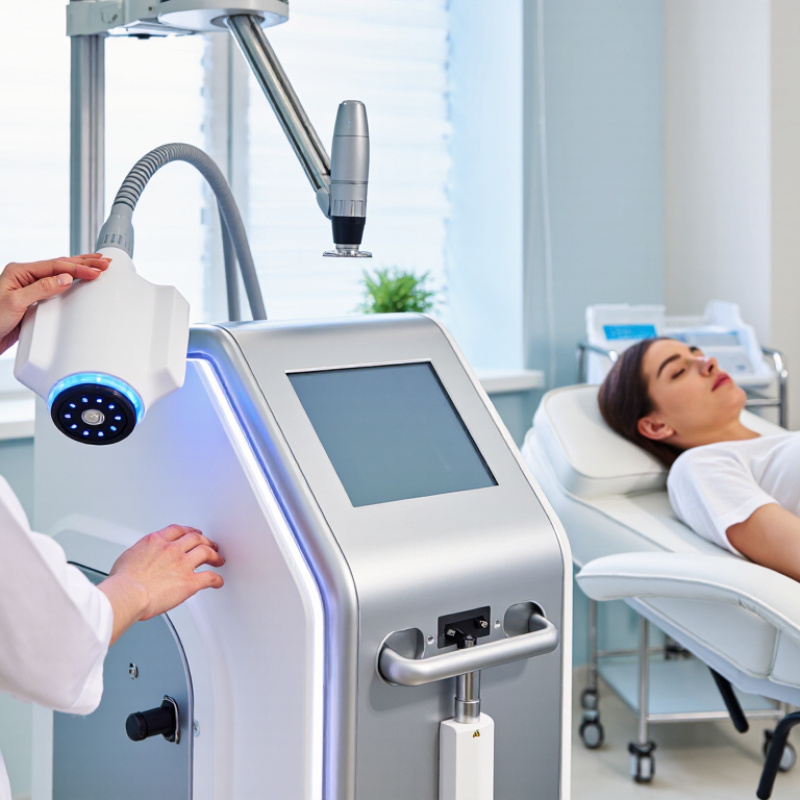
China-made laser hair removal machines are devices designed, assembled, and often tested in Chinese manufacturing facilities. They may use diode laser technology, while some sellers incorrectly describe IPL devices as lasers. That distinction matters because IPL uses broad-spectrum light, not one focused wavelength.
A professional machine usually includes adjustable fluence, pulse duration, wavelength options, and contact cooling. These controls help practitioners match treatment settings to skin tone, hair thickness, and treatment area. For example, thick leg hair may require different settings from fine facial hair. In practice, cooling quality can affect comfort as much as power does.
Manufacturing quality varies widely. Some machines have stable energy output, clear operating data, and responsive technical support. Others may look impressive but provide limited testing records or vague safety instructions. A lower purchase price can hide maintenance costs. Buyers should review electrical safety documentation, training materials, warranty terms, and local compliance requirements.
Results also depend on operator skill. Hair usually grows in cycles, so several sessions are commonly needed. Darker hair often responds better than very light, grey, or red hair. Skin reactions can still occur when settings are unsuitable. Careful consultation and patch testing are essential, although neither removes every risk. One uncomfortable truth is that attractive specifications do not always predict real treatment performance. Hands-on evaluation remains important.
| Evaluation Dimension | Typical Information | What It Means in Practice | Important Verification Point |
|---|---|---|---|
| Common Device Category | Professional diode-laser systems, intense pulsed light systems, and home-use light-based devices are commonly manufactured in China. | These technologies are not interchangeable. A diode laser produces a narrower wavelength band, while IPL uses a broad spectrum of light. | Confirm whether the product is a true laser, IPL device, or home-use light device before comparing specifications. |
| Common Diode-Laser Wavelengths | Approximately 755 nm, 808 nm, 940 nm, and 1,064 nm may be used individually or in combination. | Wavelength selection affects melanin absorption, penetration depth, comfort, and suitability for different skin and hair combinations. | Do not judge performance by wavelength alone. Pulse control, cooling, spot size, calibration, and operator technique also matter. |
| IPL Wavelength Range | Many IPL systems emit a broad range of light, commonly around 500–1,200 nm, with filters used to restrict the output. | IPL can reduce hair growth, but its light is less selective than a dedicated diode laser and may require careful filtering and settings. | Request the actual spectral range, filter options, and photobiological safety documentation. |
| Primary Mechanism | Selective photothermolysis: light is absorbed by melanin in the hair shaft and follicle, producing heat that can reduce future growth. | The treatment targets follicles during suitable growth phases rather than removing every hair permanently in one session. | Marketing claims should distinguish long-term hair reduction from guaranteed permanent hair removal. |
| Expected Treatment Course | Professional treatments commonly require multiple sessions, often spaced about 4–8 weeks apart depending on the body area and growth cycle. | Visible reduction is usually gradual. Maintenance treatments may be needed because dormant follicles can become active later. | A credible supplier should provide a treatment protocol rather than promise one-session results. |
| Most Responsive Hair | Coarse, dark hair generally responds better because it contains more melanin to absorb the light. | Dark hair on lighter or medium skin usually provides stronger contrast and is easier to treat safely. | Results vary with hair thickness, density, hormonal factors, treatment area, and settings. |
| Less Responsive Hair | Blonde, red, gray, and white hair generally responds less effectively because it contains less target melanin. | Increasing energy indiscriminately is not a reliable solution and may increase the risk of skin injury. | Suppliers should clearly state limitations instead of claiming equal effectiveness for all hair colors. |
| Skin-Type Considerations | Darker skin can be treated with suitable wavelengths, conservative parameters, and effective cooling, but requires greater attention to epidermal melanin. | The treatment plan should be adjusted to reduce the risk of burns, pigmentation changes, or blistering. | Look for documented skin-type guidance, test-spot procedures, and trained operator support. |
| Typical Fluence Range | Professional systems may offer broad adjustable ranges, often approximately 5–40 J/cm², depending on technology, spot size, and treatment mode. | A higher maximum setting does not automatically indicate better performance or safety. | Check output accuracy, calibration records, pulse width, repetition rate, and whether specifications are measured or merely advertised. |
| Cooling Systems | Common options include sapphire contact cooling, water cooling, air cooling, and chilled-tip systems. | Cooling can improve comfort and help protect the epidermis, but it does not eliminate all treatment risks. | Verify cooling temperature control, contact consistency, maintenance requirements, and overheating protection. |
| Spot Size and Speed | Larger spot sizes can cover more skin per pulse; many professional systems offer several interchangeable or adjustable spot sizes. | Large areas such as legs and backs can be treated more efficiently, while smaller areas require greater precision. | Compare effective treatment area, repetition rate, pulse overlap control, and real-world treatment time. |
| Typical Short-Term Reactions | Temporary redness, warmth, mild swelling around follicles, and short-term sensitivity may occur. | These effects are often temporary, but unusual or severe reactions require professional assessment. | The supplier should provide contraindications, aftercare instructions, eye-safety guidance, and incident procedures. |
| Potential Risks | Improper settings may cause burns, blisters, temporary or persistent pigmentation changes, scarring, or paradoxical hair growth in uncommon cases. | Risk depends on skin type, tanning, medication, settings, cooling, operator training, and equipment condition. | A safety assessment and patch test should be completed before treating a large area. |
| Evidence of Effectiveness | Laser and light-based hair reduction can work when the device is appropriately designed, correctly maintained, and properly operated. | Country of manufacture alone does not determine effectiveness. Device quality and treatment practice are more important. | Request test reports, clinical or technical data, output measurements, user training, and post-sale service details. |
| Regulatory Documentation | Depending on the target market, documentation may include electrical safety, electromagnetic compatibility, quality-management, and medical-device compliance records. | Regulatory requirements differ by country and by whether the device is professional or intended for home use. | Verify certificate validity, exact model correspondence, issuing body, intended use, and market authorization. |
| Maintenance Requirements | Professional systems may require cooling-fluid checks, filter or handpiece inspection, cleaning, calibration, and scheduled servicing. | Poor maintenance can reduce output stability, comfort, service life, and treatment consistency. | Confirm spare-part availability, service response time, warranty terms, and calibration support. |
| Overall Assessment | China-made laser hair removal machines can be effective, but quality varies significantly across models and manufacturers. | A well-documented device with stable energy delivery, suitable cooling, trained operators, and proper protocols is more likely to deliver consistent results. | Evaluate measurable performance, safety documentation, training, service, and compliance—not price or country of origin alone. |
They are devices designed, assembled, and often tested in Chinese manufacturing facilities. Some use diode laser technology. Others may be IPL devices incorrectly described as lasers.
A laser uses a focused wavelength. IPL uses broad-spectrum light. The difference affects treatment expectations, settings, and technical evaluation.
Look for adjustable fluence, pulse duration, wavelength options, and contact cooling. These controls help match treatment to skin tone, hair thickness, and body area. Fine facial hair may need different settings from thick leg hair.
No. Cooling quality can affect comfort as much as power. Stable energy output also matters. An impressive specification sheet may not predict real performance.
Dark, coarse hair usually responds best because it contains more melanin. Blonde, red, white, and very fine hair can be harder to treat. Results may be uneven.
Yes, but device choice and operator skill are especially important. A 1064 nm Nd:YAG laser may reduce surface pigment absorption. Cooling and cautious settings still matter. A patch test is important.
Several sessions are commonly needed because hair grows in cycles. Maintenance treatments may follow later. Hormonal changes can encourage new growth. Complete disappearance is not guaranteed.
Review electrical safety documents, training materials, warranty terms, and local compliance requirements. Ask about technical support and maintenance costs. A low price can hide expensive repairs. That part is easy to overlook.
China-made laser hair removal machines include a wide range of professional and home-use devices designed to reduce unwanted hair through controlled light energy. Their performance depends on the technology used, such as diode laser or intense pulsed light, along with features like adjustable energy levels, cooling systems, skin-tone sensors, and treatment-area settings. By targeting pigment in the hair follicle, these devices can gradually slow regrowth over several sessions rather than providing instant, permanent removal.
So, does laser hair removal really work? In many cases, it can deliver noticeable and long-term hair reduction, especially when there is a clear contrast between darker hair and lighter skin. Results may be less predictable for very light, gray, red, or fine hair, while darker skin requires carefully selected settings and suitable safety controls. Buyers should also evaluate product quality, certifications, user instructions, maintenance needs, cooling performance, and operator training. Safe use, consistent treatment schedules, and realistic expectations are essential for achieving reliable results.
