Vasan Medicals Vasan Medicals

China Best SHR vs IPL Differences Which Is Better?

Time:2026-10-04 Author:Aria
0%

Choosing the right hair-removal platform requires more than comparing attractive machine photographs. Clinics, distributors, and beauty businesses must examine wavelength, fluence, pulse width, cooling, treatment speed, operator training, and after-sales support. This is where the SHR vs IPL differences become important. IPL uses broad-spectrum light, while SHR usually describes a lower-fluence, repetitive-pulse treatment approach, often delivered with continuous movement. However, “SHR” is not always a universal technical standard. Chinese manufacturers may use the term differently.

Market reports show strong demand for professional aesthetic devices. Grand View Research has identified the global aesthetic lasers market as a major growth sector, supported by rising beauty spending and non-invasive treatment demand. Fortune Business Insights also reports continued expansion in the hair-removal devices market, driven by clinics, salons, and home-use technology. These reports indicate commercial opportunity, but they do not prove that every SHR or IPL system delivers equal results. Specifications matter more than labels.

Clinical performance depends on skin tone, hair color, treatment area, cooling quality, and practitioner settings. Darker skin may require conservative parameters and stronger epidermal protection. Blonde, gray, or red hair can respond less predictably because of limited melanin absorption. Real experience matters. A device that feels fast in a showroom may perform differently during a full-day clinic schedule. Buyers should request verifiable test data, electrical certifications, warranty terms, and training records. The comparison is not completely simple. A reliable answer must connect technology with safety, workflow, maintenance, and patient expectations.
China Best SHR vs IPL Differences Which Is Better?

What Are SHR and IPL Hair Removal Technologies?

SHR and IPL are light-based hair removal technologies, but they deliver energy differently. IPL uses broad-spectrum flashes across a wider wavelength range. The light targets melanin in the hair shaft, creating heat that weakens the follicle. SHR usually uses repeated, lower-energy pulses with continuous movement over the treatment area. This gradually warms the follicle instead of delivering one intense flash. The exact design can vary between devices.

In practical treatments, IPL may feel like quick rubber-band snaps. SHR often feels warmer, like a moving massage with mild heat. Cooling contact can make both options more comfortable. Neither method removes every hair permanently after one session. Hair grows in cycles, so several treatments are normally needed. Darker hair often responds better because it contains more melanin. Very light, grey, or red hair may respond poorly.

Skin tone matters. A trained practitioner should check recent tanning, medications, sensitivity, and hair thickness before treatment. Settings should be adjusted carefully, especially for deeper skin tones. Incorrect energy levels can cause burns or pigment changes. I once assumed stronger flashes meant faster results, but that view was too simple. Comfort, consistency, device quality, and professional technique also influence outcomes. A patch test is sensible, though it cannot predict every reaction. IPL may suit larger areas and visible contrast, while SHR can feel gentler during repeated passes. The better choice depends on your skin, hair, treatment area, and realistic expectations.

How Do SHR and IPL Work on Different Skin and Hair Types?

SHR and IPL work differently on different skin and hair types. IPL sends broad-spectrum light into the skin, targeting melanin in the hair shaft. It usually performs best on coarse, dark hair with lighter skin. The contrast helps energy reach the follicle while limiting surface heating. Blonde, white, and gray hair contain little pigment, so IPL may produce weak results. Red hair can also respond unpredictably.

SHR uses repeated, lower-energy pulses and gradually warms the follicle. Many clients describe the sensation as gentle heat rather than sharp snaps. It may suit some medium or darker skin tones, but settings still require professional judgment. Dark skin contains more melanin, which increases the risk of burns or uneven pigmentation with poorly selected energy. A trained practitioner should check recent tanning, medications, skin conditions, and hair density before treatment. A patch test matters.

Neither method is magic. Results depend on hormones, growth cycles, and treatment consistency. A technician may recommend several sessions because visible hair grows in different phases. Thick underarm hair often responds faster than fine facial hair. That difference is easy to underestimate. SHR is not automatically safer, and IPL is not automatically stronger. In practice, the best choice depends on your skin tone, hair pigment, treatment area, and the operator’s experience. Even careful plans can need adjustment after the first session.

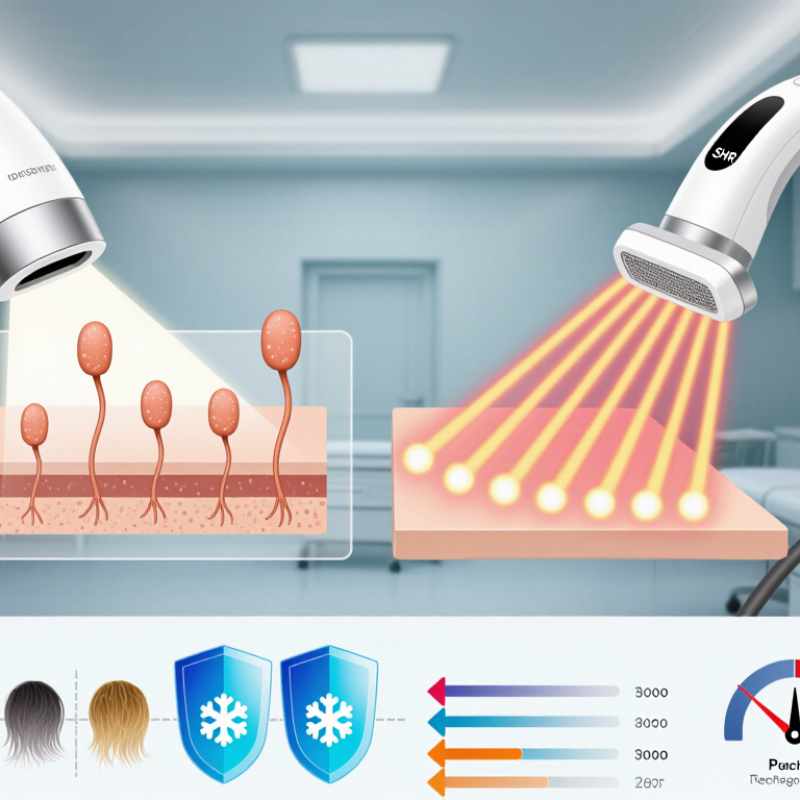
IPL uses broad-spectrum filtered light, while SHR-style treatment generally uses a narrower filtered range and delivers lower fluence through repeated pulses or in-motion passes. The representative wavelength ranges shown here are device-dependent. Both methods work best on darker, coarse hair with sufficient contrast from the surrounding skin; neither method reliably targets white, gray, or very light-blonde hair because these hairs contain little melanin.

SHR vs IPL: Key Differences in Comfort, Speed, and Results

SHR vs IPL: Key Differences in Comfort, Speed, and Results

SHR and IPL use different treatment approaches for reducing unwanted hair. IPL delivers stronger flashes over a broader light spectrum. SHR usually uses lower energy and repeated pulses while the handpiece moves continuously. Many clients describe SHR as warm massage-like flashes. IPL can feel sharper, like small rubber-band snaps. Comfort still depends on hair thickness, skin sensitivity, cooling, and the treated area. Underarms may feel more intense than the lower legs.

SHR often covers larger areas quickly because the applicator glides steadily. IPL may require more deliberate flashes, especially around curves and smaller zones. Results are not identical for everyone. Darker, thicker hair often responds more visibly because light targets pigment in the follicle. Light, red, grey, or very fine hair may respond poorly. That limitation matters.

Professional assessment is essential. A trained provider should review skin tone, recent tanning, medications, and hair growth patterns. Patch testing can reveal unexpected redness or discomfort before a full session. Eye protection is necessary. Settings should be adjusted, not copied from another person’s treatment. The comparison is not perfectly clean, either. “SHR” can describe a delivery method, while IPL describes the light technology itself. Some devices combine both concepts. More sessions may be needed than expected, and maintenance is common. Even careful treatment can produce uneven progress.

Which Treatment Is Safer and More Effective for You?

China Best SHR vs IPL Differences: Which Treatment Is Safer and More Effective for You?

SHR and IPL are often compared as separate technologies. In practice, SHR usually describes a lower-fluence, repeated-pulse delivery method using broad-spectrum light. IPL can use higher energy per pulse, with longer pauses between treatments. This distinction matters. A 2022 review in Lasers in Medical Science reported hair-reduction results commonly ranging from 50% to 80% after several sessions, depending on hair color, skin tone, and treatment settings. Results are not guaranteed.

Safety depends more on assessment than the label. Darker skin may face higher risks of burns or post-inflammatory pigmentation, especially with excessive fluence. Cooling, eye protection, a skin consultation, and a patch test are essential. SHR may feel gentler because heat builds gradually. Comfort is not proof of effectiveness. IPL can be effective, but poor settings can cause sharp pain, redness, or blistering. The FDA describes permanent hair reduction as a stable decrease in regrowth measured over six, nine, and twelve months after treatment. That is stricter than simply seeing less hair for a few weeks.

For sensitive skin or low pain tolerance, SHR may be a reasonable option. For coarse, dark hair, conventional IPL may deliver stronger follicle heating. Yet the operator’s training often matters more than the treatment name. I would not promise that one method is universally safer. Clinical evidence remains uneven, and many studies use small samples. A careful consultation should consider medication, tanning, hormonal conditions, and previous reactions before choosing either approach.

How to Choose the Best SHR or IPL Device in China

Choosing the best SHR or IPL device in China requires more than comparing prices. SHR usually describes a low-fluence, rapid-pulse treatment method, while IPL uses filtered broad-spectrum light. However, terminology varies between suppliers. Ask for measured fluence, pulse width, repetition rate, spot size, and cooling performance. Request independent test reports, electrical safety documents, and evidence for the intended treatment area. Clear records matter more than impressive photos.

My experience suggests that reliable support can decide a purchase. Check whether the manufacturer provides operator training, treatment protocols, maintenance instructions, and responsive technical service. A device should include adjustable settings for different skin tones and hair characteristics. Stable energy delivery is essential. Ask to inspect a working unit, not only a showroom model. If possible, arrange a supervised demonstration and record skin response, comfort, treatment speed, and recovery time. One small detail is often missed: replacement handpieces and filters may affect long-term costs.

Tips: Compare at least three suppliers. Verify serial numbers and calibration records. Ask how cooling is tested under continuous use. Confirm warranty coverage in writing. Review user training materials before ordering. Do not choose the highest energy setting automatically; appropriate settings depend on skin type, hair color, treatment goals, and professional assessment. I would also keep a trial checklist, because first impressions can be misleading. Some specifications look excellent on paper but feel unstable during repeated operation. Calibration evidence may be incomplete, so pause and investigate rather than accepting confident promises.

FAQS

What is the main difference between SHR and IPL hair reduction?

IPL uses broad-spectrum flashes to heat pigment in the hair shaft. SHR uses repeated, lower-energy pulses during continuous movement. SHR gradually warms the follicle. IPL feels more like quick rubber-band snaps.

Which method usually feels more comfortable?

SHR often feels like a warm, moving massage. IPL may feel sharper, especially on thick hair or sensitive areas. Cooling contact can improve comfort. Sensations still vary.

Which hair types respond best to light-based treatments?

Dark, coarse hair usually responds better because it contains more melanin. Blonde, white, grey, red, and very fine hair may respond poorly. Results can be uneven.

Can people with darker skin tones receive these treatments?

They may be suitable for some darker skin tones, but settings require careful adjustment. Skin melanin can absorb extra energy. Incorrect settings may cause burns or pigment changes.

How many sessions are usually needed?

Several sessions are normally needed because hair grows in different cycles. Thick underarm hair may respond faster than fine facial hair. Maintenance treatments can still be necessary.

Is SHR always safer than IPL?

No. SHR is not automatically safer, and IPL is not automatically stronger. Safety depends on skin tone, tanning, medications, sensitivity, device design, and operator skill. That distinction matters.

Why is a patch test recommended?

A patch test can reveal unexpected redness, heat, or discomfort before full treatment. It cannot predict every reaction. A cautious test is still worthwhile.

Which option works faster on larger treatment areas?

SHR may cover larger areas quickly because the applicator glides continuously. IPL uses more deliberate flashes, especially around curves. Speed does not guarantee better results.

What should a practitioner check before treatment?

They should review recent tanning, medications, skin sensitivity, hair thickness, and growth patterns. Eye protection is necessary. Settings should never be copied from another person’s treatment.

Conclusion

SHR and IPL are two popular light-based hair removal technologies, but they use different treatment approaches. IPL delivers stronger pulses of broad-spectrum light, targeting melanin in the hair follicle, while SHR uses repeated, lower-energy pulses with gradual heating. Understanding the SHR vs IPL differences can help users compare comfort, treatment speed, skin compatibility, and expected results. IPL may provide quick sessions for suitable skin and hair combinations, while SHR is often considered more comfortable and adaptable for larger treatment areas or clients with greater sensitivity.

The best option depends on skin tone, hair color, treatment area, cooling performance, and professional operating settings. Both technologies require multiple sessions because hair grows in cycles, and results can vary from person to person. When choosing an SHR or IPL device in China, evaluate energy control, pulse consistency, safety features, maintenance requirements, training support, and compliance with applicable regulations. A qualified professional should assess each client and select appropriate settings to promote safe, effective, and consistent treatment.

Aria

Aria

Aria is a dedicated marketing professional with a deep passion for innovative strategies and a keen understanding of our company's product offerings. With a wealth of experience in the industry, Aria excels at crafting engaging content that highlights the unique features and benefits of our......