Vasan Medicals Vasan Medicals

How to Choose Home vs Professional Laser Treatment?

Time:2026-10-14 Author:Sienna
0%

Choosing between home and professional laser treatment is not simply a matter of price or convenience. It depends on your skin tone, hair colour, treatment area, device strength, and comfort with risk. A small home device may fit a busy schedule. A clinic treatment may offer stronger results and closer supervision.

Dr. Tina Alster, a board-certified dermatologist and laser specialist, offers a useful reminder: “The device matters, but the operator matters more.” Her point is practical. Professional treatment includes skin assessment, calibrated settings, protective eyewear, and guidance after each session. Home treatment requires careful reading, consistent use, and realistic expectations. It can feel simple. It is not risk-free.

This home vs professional laser treatment guide will compare effectiveness, safety, cost, convenience, and suitability. It will also examine common details people overlook, such as patch testing, recent sun exposure, medication use, and skin sensitivity. Darker skin tones may need particular caution because incorrect settings can increase the risk of burns or pigmentation changes. Hair colour also matters; many laser devices work poorly on very light, grey, or red hair.

Convenience can be persuasive. I understand that. Still, faster is not always better. A professional consultation may prevent an unsuitable purchase or an avoidable irritation. Home devices can be reasonable for selected users, but they should not replace medical advice when unusual pain, blistering, or persistent redness appears. The safest choice is rarely the most dramatic one. It is the option that matches your body, expectations, and ability to use the treatment responsibly.
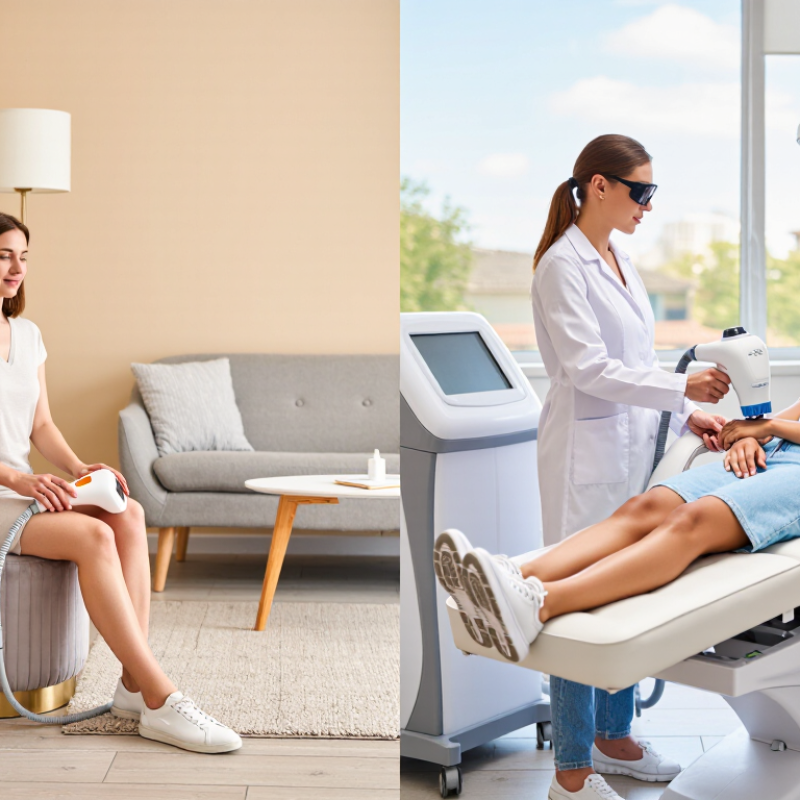
How to Choose Home vs Professional Laser Treatment?

Define the Goal: FDA Recognizes “Permanent Hair Reduction,” Not Total Removal

How to Choose Home vs Professional Laser Treatment?

The goal should be clear before choosing a device or clinic. In the United States, the FDA recognizes “permanent hair reduction,” not total hair removal. This means a long-term, stable reduction in regrowth after a treatment course. Some hairs may return. They can also become finer and lighter. Maintenance sessions may still be needed.

Professional treatment usually offers higher energy, trained skin assessment, and better adjustment for hair color, skin tone, and treatment area. A qualified provider should explain realistic results, possible pigment changes, burns, and eye safety. Home devices generally use lower energy and require repeated treatments. They may suit small areas and people who prefer privacy. However, incorrect use can still irritate or damage skin. Results may vary widely. Dark, coarse hair often responds better than blonde, gray, or red hair because the laser targets pigment.

Tips: Ask how “permanent reduction” is measured. Request a patch test when appropriate. Avoid treating tattoos, suspicious moles, or recently tanned skin. Follow the device instructions exactly. Take clear photographs before treatment, using similar lighting each time. This makes gradual change easier to judge. It is tempting to expect perfectly smooth skin forever, but that expectation is unrealistic. Even a careful plan can need adjustment. A consultation may reveal that another method is safer for your skin or hair type.

Compare Energy and Control: Home IPL Delivers Lower Fluence Than Clinic Lasers

When comparing home and professional laser treatment, energy is the clearest dividing line. Home IPL devices usually deliver lower fluence than clinic systems. Fluence is measured in joules per square centimetre. IPL uses broad-spectrum light, not one laser wavelength. Its gentler output supports consumer use and repeated sessions. You may feel warmth, a quick snap, or mild redness. That does not prove the treatment is working.

Clinic lasers can provide higher fluence and more precise wavelength selection. A trained practitioner can adjust pulse duration, spot size, cooling, and treatment spacing. These controls matter when hair is coarse, skin is sensitive, or pigmentation varies across one area. In my experience, professional assessment often prevents unrealistic expectations. Darker or recently tanned skin needs particular caution. Excess heat may increase the risk of burns or pigment changes. More power is not automatically better.

At home, control means consistency and restraint. Follow the instructions carefully. Protect your eyes and avoid irritated skin. Perform a patch test when advised. Results depend on hair colour, growth stage, skin tone, and timing. Some users stop too early; others increase frequency because progress feels slow. That deserves reflection. A qualified clinic may be safer for complex skin concerns, uneven pigmentation, or poor response. Neither option guarantees permanent hair removal, and individual results can vary.

Match Skin and Hair Type: AAD Says Results Vary by Hair and Skin Color

How to Choose Home vs Professional Laser Treatment?

Hair and skin color strongly influence laser hair-removal results. The American Academy of Dermatology says dark hair usually responds best because it absorbs more laser energy. Blonde, red, gray, and white hair contain less usable pigment. Results may be limited. Skin tone matters too. Darker skin can experience burns or temporary pigment changes if settings are poorly selected. A careful consultation is essential.

Professional treatment allows trained practitioners to adjust wavelength, cooling, pulse duration, and energy. These details matter on olive, brown, or deeply pigmented skin. Peer-reviewed clinical reviews in Dermatologic Surgery commonly report about 70–90% hair reduction after several professional sessions. That figure is not a promise. Hormones, hair thickness, treatment timing, and body area can change the outcome.

Home devices generally use lower energy, so progress may take longer. They may suit lighter skin with dark hair, but device instructions still require honest self-assessment. Some home users expect permanent removal after two sessions. That expectation needs correction. The AAD describes laser treatment as long-term reduction, not guaranteed permanent removal. Patch testing helps reveal irritation, uneven response, or unexpected darkening. A neat percentage can mislead. Personal evaluation still matters.

How to Choose Home vs Professional Laser Treatment? — Match Skin and Hair Type: Results Vary by Hair and Skin Color

Skin and Hair Profile Expected Response Home Treatment Professional Treatment Practical Choice and Safety Notes
Light to medium skin with dark brown or black hair Usually the most responsive combination
The contrast between pigmented hair and lighter skin helps the light target the hair follicle.
May provide gradual hair reduction when the device is cleared for the user’s skin tone and hair color. Results generally require repeated use according to the device instructions. Usually offers stronger, more precisely controlled treatment and can be adjusted for different body areas and hair thickness. Either option may be considered. Professional care is preferable for extensive areas, coarse hair, or faster and more closely monitored treatment.
Medium to deep brown skin with dark hair Responsive, but skin protection is especially important
More skin pigment can absorb light and increase the risk of burns or temporary or lasting dark or light marks.
Use only a device specifically indicated for the user’s skin tone. Avoid use on recently tanned skin and follow the patch-test instructions. A trained provider can select suitable settings and, when appropriate, a longer-wavelength system that is commonly used to reduce absorption by the surface skin. Professional assessment is the safer starting point, especially for sensitive skin, a history of discoloration, or treatment of the face.
Very deep skin tone with dark hair Possible response with a narrower safety margin
The difference between hair pigment and skin pigment is smaller, so incorrect settings can raise the risk of skin injury.
Many home devices have skin-tone restrictions. Do not use a device if its instructions exclude the user’s skin tone or if the sensor does not confirm suitability. Treatment should be selected and performed by an experienced medical professional who can assess skin tone, hair characteristics, and the risk of pigment changes. Professional evaluation is generally the better choice. A test spot and conservative settings may be appropriate before treating a larger area.
Light skin with blonde, red, gray, or white hair Often limited or poor response
Many light-based systems depend on melanin in the hair. Light, gray, and white hair contain little or no target pigment.
Often provides little benefit for blonde, red, gray, or white hair. Repeated use does not reliably compensate for a lack of hair pigment. Results may still be limited. A clinician can confirm whether the hair contains enough pigment to respond and discuss non-light-based alternatives when appropriate. Do not choose a device based only on skin tone. Hair color and thickness are critical predictors of response.
Fine or very light body hair Less predictable
Fine hair has less pigment and a smaller target, which can reduce treatment effectiveness.
May produce minimal or uneven reduction, even when the skin and hair colors appear suitable. A professional can assess whether the hair is thick and pigmented enough to treat and can avoid unnecessary exposure when the expected benefit is low. Obtain an assessment before purchasing a device or committing to a treatment plan.
Coarse, dense, dark hair Generally more responsive
Coarser, darker hair usually contains more pigment and absorbs more energy than fine hair.
Can gradually reduce growth, but the lower energy of home devices typically means slower and less complete results. Often responds well to professionally controlled treatment. Multiple sessions are usually needed because hair grows in different cycles. Professional treatment may be more efficient for large areas or dense growth; home treatment may suit maintenance when safe for the skin tone.
Recently tanned or sun-exposed skin Higher risk and often unsuitable temporarily
Increased skin pigment can absorb more light and raise the risk of burns and pigment changes.
Delay treatment according to the device instructions and avoid treating sunburned, irritated, or peeling skin. A provider may postpone treatment, reassess the skin, or adjust the plan. Recent tanning should always be disclosed. Postpone treatment until the skin has returned to its usual color and is fully healthy.
Face, hormonal hair, or sudden new growth May require medical evaluation
Hormonal factors can affect hair growth and may make results slower, less complete, or less durable.
Use only where the device instructions specifically permit facial treatment. Avoid areas near the eyes and never treat an unapproved site. A clinician can evaluate the cause of new or excessive growth, select appropriate settings, and discuss treatment of related hormonal factors. Choose professional advice when growth is sudden, excessive, accompanied by other symptoms, or located on a sensitive facial area.
Moles, tattoos, dark spots, or irritated skin in the treatment area Requires avoidance or professional assessment
Dark markings can absorb light and may be injured or altered.
Do not treat over tattoos, suspicious spots, open wounds, active rashes, or irritated skin. Cover or avoid areas only as directed by the instructions. A trained provider can identify areas that should be avoided and determine whether a skin lesion needs medical assessment before treatment. Do not use light-based hair removal over an unexplained or changing skin spot without medical advice.
Time, cost, and maintenance Different trade-offs
Neither option guarantees permanent removal. Regrowth and maintenance treatments can occur with both approaches.
Lower upfront cost and greater privacy, but treatment takes ongoing time and depends heavily on consistent, correct use. Higher cost per visit, but treatment is performed with stronger equipment, clinical oversight, and individualized settings. Choose home treatment for convenience when the device is suitable and expectations are modest. Choose professional care for individualized risk assessment or stronger treatment.

General safety note: Light-based hair removal works best when there is adequate contrast between pigmented hair and the surrounding skin. Results vary by hair color, hair thickness, skin tone, treatment area, device, and hair-growth cycle. Follow the specific instructions for any home device, protect treated skin from unnecessary sun exposure, and seek professional advice for darker skin tones, recent tanning, facial or hormonal hair, suspicious skin spots, or a history of abnormal scarring or pigment changes.

Plan the Course: AAD Guidance Commonly Requires Six or More Treatments

How to Choose Home vs Professional Laser Treatment?

Plan the course, not just the device. The American Academy of Dermatology Association (AAD) explains that laser hair removal commonly requires six or more treatments. Hair grows in cycles, so one session cannot reach every follicle effectively. Treatments are often spaced several weeks apart. Your calendar matters.

Professional treatment offers clinical assessment before each session. A trained provider can adjust energy levels for hair thickness, body area, and skin tone. The AAD also notes that some people need maintenance treatments after the initial course. Results vary. They are not always permanent. Darker or finer regrowth may still appear.

Home devices usually use lower energy than professional systems. That can improve convenience, but it may extend the treatment plan. The U.S. Food and Drug Administration distinguishes permanent hair reduction from permanent hair removal in device claims. That difference deserves attention. Read it carefully. Follow the instructions exactly, especially around sun exposure, patch testing, and eye protection. A 2023 professional dermatology review also emphasized that outcomes depend on wavelength, treatment settings, hair characteristics, and skin type. I would not choose based on price alone. A cheaper plan can become expensive when sessions are missed or used inconsistently. Ask whether the proposed schedule reflects your skin, hair, and realistic routine. Perfect plans rarely survive real life.

Assess Safety and Oversight: Compare FDA-Cleared Devices and Trained Clinicians

Choosing home versus professional laser treatment begins with safety, not convenience. FDA-cleared devices have passed a review for specific uses, but clearance does not guarantee suitability for every person. Skin tone, hair color, medical history, and treatment area can change the risk.

At home, the user controls every decision. That can be empowering, but mistakes are easy. A forgotten patch test, repeated flashes, or poor eye protection may cause burns or irritation. Read the instructions carefully. Check whether the device includes skin-tone limits, treatment schedules, and clear warnings. Keep records of dates and reactions. Small details matter.

A trained clinician can examine your skin before treatment and adjust settings during each visit. They may notice inflammation, medication effects, or pigment changes that a home user could miss. Professional oversight also provides protective eyewear, controlled energy levels, and follow-up care when problems appear. Ask about training, device clearance for the intended procedure, sanitation, and emergency protocols. Do not accept vague answers.

No system is perfect. Even experienced clinicians can misjudge a reaction, and home users may underestimate slow irritation. A cautious provider should welcome questions and explain uncertainty. If pain feels sharp, skin turns unusually pale or dark, or blistering appears, stop treatment and seek qualified medical advice. Safety deserves more attention than speed.

FAQS

Does laser treatment remove hair permanently?

It usually means permanent hair reduction, not complete removal. Some hairs may return finer and lighter. Maintenance sessions may still be needed.

How does professional treatment differ from home treatment?

Clinics usually use higher energy and more adjustable settings. Home devices use lower energy and need repeated sessions. More power is not automatically better.

Which hair colors respond best?

Dark, coarse hair often responds best because it contains more targetable pigment. Blonde, red, gray, and white hair may respond poorly.

Can darker skin receive laser treatment safely?

It can, but settings require careful adjustment. Poor settings may cause burns or temporary pigment changes. A trained assessment is important.

What does home IPL feel like?

You may feel warmth, a quick snap, or mild redness. That feeling does not prove success. Results depend on timing and consistency.

Should I choose a home device for small areas?

It may suit small areas and people who value privacy. Follow the instructions exactly. Incorrect use can still irritate or damage skin.

What should I avoid before treatment?

Avoid recently tanned skin, tattoos, suspicious moles, and irritated areas. Protect your eyes. Request a patch test when appropriate.

How can I judge gradual results?

Take clear photographs under similar lighting each time. Compare the same body area. Two sessions may not show much change.

Is a high reduction percentage guaranteed?

No. Reported results vary with hair thickness, hormones, skin tone, and body area. A neat percentage can mislead. Personal response matters more.

When might professional advice be safer?

Consider a qualified clinic for darker skin, uneven pigmentation, sensitive areas, or poor home-device response. The safest method may not be the expected one.

Conclusion

Choosing between home vs professional laser treatment starts with setting realistic expectations. Most regulatory guidance defines the goal as permanent hair reduction rather than complete removal, so results can differ from person to person. Home IPL devices generally use lower energy levels than clinic-based lasers and offer greater convenience, while professional treatments provide stronger energy, more precise settings, and clinical supervision. The best option depends on your hair color, skin tone, sensitivity, and treatment area, since darker, coarser hair often responds more visibly than light, gray, or red hair.

A successful plan also requires patience. Dermatology guidance commonly recommends six or more sessions, followed by occasional maintenance treatments when needed. Before choosing a device or clinic, compare safety clearances, operating instructions, and the qualifications of the person performing the treatment. Professional care may be preferable for complex skin types, larger areas, or anyone concerned about side effects, while home treatment can suit users seeking a gradual and convenient approach.

Sienna

Sienna

Sienna is a skilled marketing professional with a deep expertise in our company’s core products and services. With a passion for innovation and detail, she plays a pivotal role in crafting insightful blog posts that not only highlight the unique features of our offerings but also provide valuable......