Vasan Medicals Vasan Medicals

Top 10 Diode Laser vs Alexandrite Laser Differences

Time:2026-09-29 Author:Aria
0%

Choosing between diode laser vs alexandrite laser is not a simple contest of “stronger” and “better.” Wavelength, skin tone, hair color, treatment area, and cooling all influence the decision. In practice, a device that works well on one person may be unsuitable for another. Details matter.

Grand View Research estimated the global laser hair removal market at about US$1.02 billion in 2023, reflecting strong demand for treatment. Market growth, however, does not prove that one wavelength is best for every patient. The American Academy of Dermatology advises that laser hair removal can require multiple sessions and that results vary with hair and skin characteristics. These are useful reminders: headline claims rarely capture the full clinical picture.

The comparison also rests on a foundational principle. In their landmark paper, dermatologist Rox Anderson and John Parrish described “selective photothermolysis”—using light to target specific structures while limiting injury to surrounding tissue. That principle helps explain why alexandrite lasers, typically operating at 755 nm, and diode systems, commonly operating around 800–810 nm, can behave differently. It does not, by itself, identify a universal winner.

What should readers weigh? Fitzpatrick skin type, tanning history, hair thickness, pulse settings, cooling, and the operator’s training. Ask for a consultation. Request device and safety details. This guide compares ten practical differences and flags where evidence or individual response may complicate a neat ranking. Some conclusions remain imperfect; careful evaluation matters more than a confident slogan.
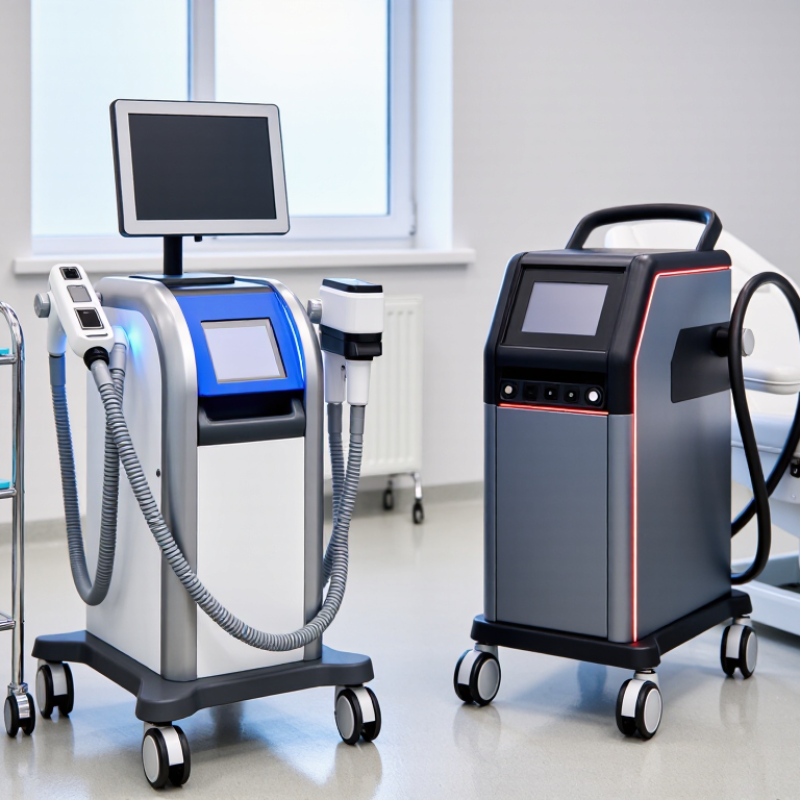
Top 10 Diode Laser vs Alexandrite Laser Differences

How Diode and Alexandrite Lasers Produce Light

Diode lasers generate light at a semiconductor junction. An electric current energizes electrons, and their recombination with positively charged gaps releases photons. The semiconductor’s composition and device design help determine the output wavelength. Many hair-removal diode systems operate around 800–810 nm. The beam can look like a steady, concentrated red glow at the handpiece, though the treatment light itself may be invisible.

Alexandrite lasers work differently. Light excites chromium ions inside a chrysoberyl crystal, which then emit laser energy at about 755 nm. A clinical review by Gan and Graber reports these common diode and alexandrite treatment wavelengths (Dermatologic Surgery, 2013;39:823–838).

Wavelength affects how skin pigments absorb energy, but it does not alone predict comfort or results. Skin tone, hair characteristics, cooling, and settings matter too. The simple comparison has limits.

Tips: Ask which wavelength the device uses and how its settings suit your skin and hair. Do not assume two machines with similar-looking flashes deliver the same energy. Calibration matters.

Wavelength, Melanin Absorption, and Skin-Type Suitability

Top 10 Diode Laser vs Alexandrite Laser Differences: Wavelength, Melanin Absorption, and Skin-Type Suitability

Wavelength changes how laser energy meets hair and skin. Alexandrite systems commonly use 755 nm light, while diode systems usually operate near 800–810 nm. Melanin absorbs shorter wavelengths more strongly. Therefore, 755 nm energy can target fine, lighter hair efficiently, but it also interacts more with epidermal melanin. A 2022 review in Lasers in Medical Science describes this absorption pattern as a major safety factor during hair-removal treatment.

Diode energy generally penetrates slightly deeper and produces less epidermal melanin absorption than 755 nm light. This can make it more adaptable for Fitzpatrick skin types III and IV, especially with effective cooling. Alexandrite is often selected for types I–III, where melanin contrast between hair and skin is clearer. The Fitzpatrick scale remains useful, but it is not a perfect map. Skin tone can vary across the body.

Darker skin requires slower decisions.

Clinical reviews report higher pigment-change risks when strong fluence meets recently tanned or highly pigmented skin. A 2023 dermatology review recommends test spots, conservative starting settings, and careful cooling for deeper skin tones. In practice, coarse black hair may respond well to either wavelength, while pale blond or red hair responds poorly because it contains limited melanin. Results also depend on pulse duration, spot size, cooling, and operator judgment. The boundary is not perfectly clean. A cautious consultation still matters.

Differences in Hair Removal Results and Treatment Areas

Diode Laser vs Alexandrite Laser: Hair Removal Results and Treatment Areas

Alexandrite lasers use a shorter wavelength, commonly 755 nm. They target melanin strongly and often perform well on lighter skin with dark hair. Diode lasers usually operate near 810 nm. Their deeper penetration can suit medium to darker skin types when settings are carefully adjusted. This difference affects comfort, safety, and treatment speed.

A 2022 systematic review in Lasers in Medical Science reported substantial hair reduction with both technologies, but results varied widely between studies. Many patients needed four to eight sessions, followed by maintenance treatments. Alexandrite treatment may feel quicker on legs, arms, and backs because larger areas can be covered efficiently. Diode treatment may offer more controlled energy delivery on the face, bikini line, and underarms. However, facial hair can respond unevenly, especially when hormones influence growth. The comparison is not perfectly clean.

Tips: Ask for a skin-type assessment and a test patch. Confirm the wavelength, cooling method, and expected session number. Recent guidance from the American Academy of Dermatology emphasizes trained medical supervision and realistic expectations. Avoid treating tanned skin without professional review. Hair may shed after several days, not immediately. Photos can help track progress, although lighting can mislead. A 2023 clinical review also noted that maintenance is normal, not evidence of treatment failure. Results differ. That matters.

Top 10 Diode Laser vs Alexandrite Laser Differences — Differences in Hair Removal Results and Treatment Areas
Difference Diode Laser Alexandrite Laser
1. Common Wavelength Most hair-removal diode systems use an approximately 800–810 nm wavelength, which penetrates relatively deeply into the skin. Alexandrite systems commonly use a 755 nm wavelength, which is absorbed more strongly by melanin in the hair shaft and skin.
2. Best-Matched Skin Types Often suitable for lighter through medium-brown skin when the settings and cooling system are selected appropriately. Extra caution is required for deeply pigmented skin. Generally best suited to lighter skin types, especially Fitzpatrick I–III. It may carry a higher risk of epidermal pigment injury on darker or recently tanned skin.
3. Hair Color and Thickness Usually works best on coarse, dark hair. It may also be used on some finer dark hair, although results can be less predictable. Usually performs well on coarse, dark hair with strong contrast against lighter skin. Fine or lightly pigmented hair is less responsive.
4. Hair-Removal Results Can produce substantial long-term hair reduction when an adequate course of treatments is completed. Hair may become finer and grow more slowly over time. Can also produce substantial long-term hair reduction and may provide a strong response when dark hair contrasts clearly with light skin.
5. Number of Treatments A series of treatments is normally required because laser energy is most effective during the active growth phase. Treatment intervals commonly range from about 4–8 weeks, depending on the area. Also requires multiple sessions for the same hair-growth-cycle reason. Intervals commonly range from about 4–8 weeks, varying by body region and individual regrowth.
6. Common Treatment Areas Frequently used on the legs, underarms, bikini area, back, chest, arms, and face, provided the skin type and hair characteristics are assessed correctly. Commonly used on the legs, underarms, bikini area, arms, back, and other larger body areas, particularly when the skin is relatively light and untanned.
7. Facial Hair Considerations May be selected for facial areas when appropriate settings, cooling, and medical screening are used. Hormonal facial hair may require ongoing maintenance. Can be effective for suitable dark facial hair on lighter skin, but facial treatment requires careful parameter selection because facial skin is more pigment-sensitive.
8. Comfort and Cooling Often feels like a series of warm snaps or pinpricks. Contact cooling, chilled tips, or other cooling methods are commonly used to protect the epidermis and improve comfort. May feel sharper or warmer because melanin absorbs the 755 nm wavelength strongly. Dynamic cooling or another effective cooling method is commonly used.
9. Pigment-Related Safety The risk of burns or temporary pigment changes still exists, especially with recent tanning, high settings, or insufficient cooling. A conservative test spot may be appropriate. Has a comparatively higher concern for epidermal melanin absorption, so sun exposure, tanning, darker skin tones, and recently pigmented skin require particular caution.
10. Long-Term Maintenance Maintenance sessions may be needed because hormones, age, and individual hair cycles can stimulate new growth. Results are best described as long-term hair reduction rather than guaranteed permanent removal. Maintenance may also be needed for the same biological reasons. It can be highly effective for appropriate candidates, but it does not prevent all future hair growth.
Important note: Actual outcomes depend on skin tone, hair color and thickness, treatment area, hormonal factors, device settings, cooling, sun exposure, and provider experience. A qualified medical professional should assess suitability before treatment, especially for darker or recently tanned skin.

Comparing Session Comfort, Speed, and Side Effects

Top 10 Diode Laser vs Alexandrite Laser Differences

Comparing Session Comfort, Speed, and Side Effects

During treatment, both lasers can feel like warm pinpricks or quick rubber-band snaps. Cooling changes the experience significantly. Alexandrite treatments often feel sharper on sensitive areas, while diode sessions may feel warmer and slower. That is not universal. Hair thickness, treatment settings, and personal pain tolerance can change everything.

Alexandrite laser often covers large areas quickly, especially when hair is coarse and skin is relatively light. Diode laser may require more passes, but many patients find its gradual heat easier to tolerate. A trained practitioner should adjust pulse duration and energy instead of chasing speed alone. Fast sessions are not automatically better sessions.

Short-term redness and small swollen bumps around follicles can appear after either treatment. They usually settle within hours or a few days. Temporary darkening, lightening, blistering, or prolonged irritation can occur when settings do not match the skin. A test patch matters, particularly after sun exposure or with deeper skin tones. Protective cooling helps, but it cannot remove all risk. In my experience, the first session can be misleading; some people tolerate the “gentler” option less comfortably. Careful records and honest follow-up often matter more than the laser label.

Top 10 Diode Laser vs Alexandrite Laser Differences

Comparing session comfort, treatment speed, and common short-term side effects. The chart uses an evidence-informed relative index from 1 to 5; higher scores are more favorable except for side-effect burden, where a lower score is better.

Alexandrite lasers typically use a 755 nm wavelength, while diode lasers commonly operate near 800–810 nm. Actual comfort, speed, and reactions vary with skin tone, hair density, treatment area, cooling, and treatment settings.

Factors to Consider When Choosing Between the Two Lasers

Top 10 Diode Laser vs Alexandrite Laser Differences

Factors to Consider When Choosing Between the Two Lasers

Choosing between diode and alexandrite laser treatment requires more than comparing wavelengths. Alexandrite systems commonly use 755 nm light, while diode systems often use 800–810 nm. A 2022 comparative review in the Journal of Cosmetic and Laser Therapy reported that both technologies can produce substantial hair reduction, but results vary by skin tone, hair thickness, treatment settings, and follow-up time. Alexandrite often suits lighter skin with dark hair. Diode systems may offer greater flexibility for medium or darker skin, especially with careful cooling and conservative settings. Neither option works equally well for everyone.

Safety should guide the decision. Clinical literature links higher melanin levels with increased risks of burns and temporary pigmentation changes when settings are too aggressive. Ask whether the provider evaluates Fitzpatrick skin type, recent tanning, medications, and hormonal conditions. Request patch testing. It is a small step, but sometimes overlooked. Professional experience also matters because fluence, pulse duration, spot size, and cooling affect comfort and outcomes. A 2023 report from the American Society for Dermatologic Surgery continues to identify unwanted hair as a common consumer concern, yet demand does not remove the need for individualized assessment.

Tips: Compare the provider, not only the machine. Ask for realistic reduction estimates, treatment intervals, and maintenance needs. Take photographs under identical lighting. Hair cycles differ, so visible improvement may require several sessions. I would not choose based on wavelength alone; that shortcut sounds efficient, but it can be misleading.

FAQS

How do diode and alexandrite lasers differ in wavelength?

Alexandrite lasers commonly use 755 nm light. Diode lasers often use 800–810 nm light, which penetrates more deeply.

Which treatment may suit lighter skin with dark hair?

Alexandrite treatment often works well for lighter skin with dark hair. Individual results still vary.

Can diode lasers be considered for medium or darker skin?

Diode systems may offer more flexibility for medium or darker skin. Careful settings and cooling matter.

Which body areas may each laser treat efficiently?

Alexandrite treatment can cover legs, arms, and backs efficiently. Diode treatment may allow more controlled delivery on the face, bikini line, and underarms.

How many sessions might someone need?

Many people need four to eight sessions, followed by maintenance treatments. Hair growth cycles make the exact schedule unpredictable.

What should happen before treatment?

Ask for a skin-type assessment and a test patch. Discuss recent tanning, medications, and relevant hormonal conditions.

What safety details should I ask about?

Ask about provider training, cooling, and treatment settings. Aggressive settings can increase the risk of burns or temporary pigmentation changes.

Does hair disappear immediately after a session?

No. Treated hair may shed several days later. Not instantly.

How can I track progress accurately?

Take photos under the same lighting. A bright window or changed camera angle can make progress look different.

Does needing maintenance mean treatment failed?

No. Maintenance can be normal, and results differ between people. Facial hair may respond unevenly, especially when hormones affect growth.

Conclusion

The diode laser vs alexandrite laser comparison begins with how each device creates light and how that light interacts with pigment in the hair and skin. Their different wavelengths affect melanin absorption, depth of energy delivery, and suitability for various skin tones. Alexandrite lasers are often effective for lighter skin with dark hair, while diode lasers may offer greater flexibility across a broader range of skin types when settings are selected carefully. Both require attention to skin tone, hair color, and treatment history.

Results can vary by body area, hair characteristics, and individual response. Treatment speed and comfort also depend on the device, cooling system, and area being treated. Temporary redness, swelling, or sensitivity may occur with either method, while inappropriate settings can increase the risk of irritation or pigment changes. Choosing between them involves weighing skin and hair characteristics, desired treatment areas, comfort preferences, safety considerations, and guidance from a qualified practitioner.

Aria

Aria

Aria is a dedicated marketing professional with a deep passion for innovative strategies and a keen understanding of our company's product offerings. With a wealth of experience in the industry, Aria excels at crafting engaging content that highlights the unique features and benefits of our......