Vasan Medicals Vasan Medicals

What Is Better Laser or IPL for Hair Removal?

Time:2026-09-24 Author:Ethan
0%

Choosing between laser and IPL for hair removal is not as simple as picking the strongest device. Both methods use light energy to heat melanin in the hair follicle and reduce future growth. However, their technology, treatment settings, and suitability can differ significantly.

So, laser vs IPL which is better? The answer depends on your skin tone, hair color, treatment area, budget, and safety needs. Laser systems usually deliver a more concentrated beam, while IPL uses a broader range of light wavelengths. In practical terms, laser treatment may feel more targeted. IPL can feel like quick flashes across the skin. Neither option guarantees permanent hair removal. Most people need several sessions because hair grows in different cycles.

Experience also matters. A qualified professional should assess your skin and hair before treatment. They may check for recent tanning, medications, irritation, or a history of unusual scarring. Darker skin tones require careful device selection and settings, because excessive heat may increase the risk of burns or pigment changes. At-home IPL devices are generally less powerful, but they still require strict instructions and consistent use.

Small details matter.

Clinical guidance often emphasizes realistic expectations, proper cooling, and sun protection. Yet comparison articles sometimes overlook comfort, maintenance, and operator skill. That is where the decision becomes less tidy. This guide will compare laser and IPL by effectiveness, safety, pain, cost, convenience, and long-term maintenance. The goal is not to promote one universal winner, but to help you ask better questions before booking treatment.
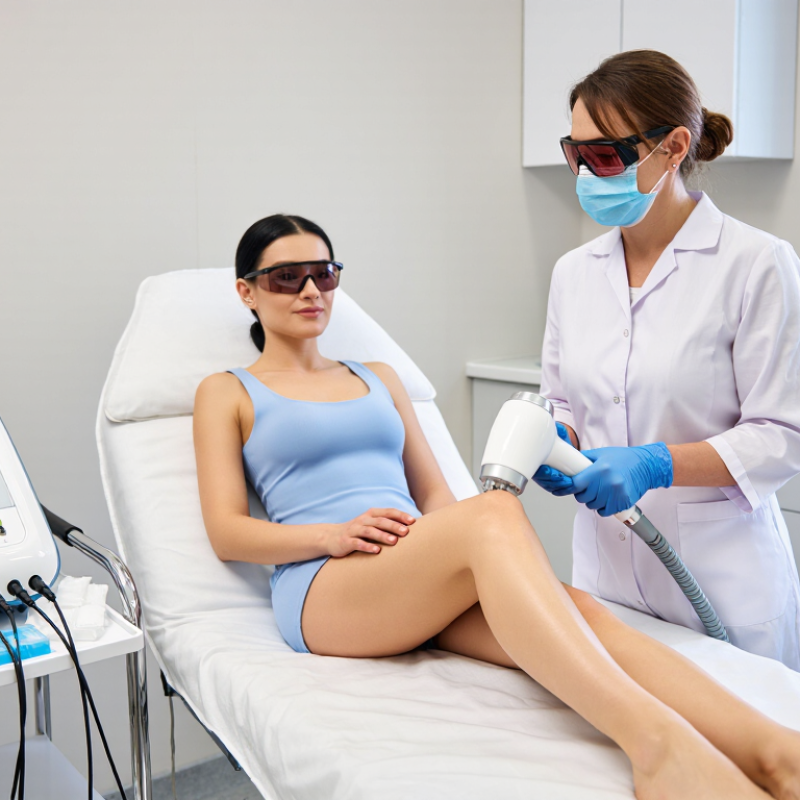
What Is Better Laser or IPL for Hair Removal?

Laser vs. IPL: How Selective Photothermolysis Removes Hair

Selective photothermolysis means using light to heat a chosen target while limiting damage to nearby tissue. For hair removal, that target is melanin, the pigment inside the hair shaft and follicle. The light becomes heat, which can impair follicle growth. It works best when the hair contains more pigment than the surrounding skin. Not magic.

Laser devices deliver a concentrated wavelength or narrow range of wavelengths. IPL uses filtered, broad-spectrum pulses, so its light is less narrowly targeted. Both can reduce hair growth, but their results depend on the device, settings, hair color, and skin tone. A practitioner adjusts pulse duration and energy to heat follicles without overheating skin. Those details matter more than a simple “laser versus IPL” label.

Hair grows in cycles, and light treatment is most effective during an active growth stage. That is why several sessions are usually needed, spaced weeks apart. Dark, coarse hair often responds better than pale, red, or gray hair, which contains less useful pigment. Some skin tones need careful assessment and tailored settings. A small test spot can help reveal how skin reacts, though it cannot guarantee a perfect outcome. Temporary redness may occur. Choosing the right treatment is less tidy than online comparisons suggest; an assessment by a qualified professional can help weigh likely benefits and risks for your skin.

Device Physics: 755–1064 nm Lasers vs. Broad-Spectrum IPL Pulses

Laser and IPL are not interchangeable light sources. Lasers emit one concentrated wavelength: 755 nm targets melanin strongly, while 810 nm offers balanced penetration. The 1064 nm Nd:YAG wavelength penetrates deeper and interacts less with epidermal melanin. That difference can improve comfort and safety for darker skin, but it may need more sessions.

IPL releases broad-spectrum pulses, commonly filtered around 500–1200 nm. Its scattered energy reaches several depths, rather than one precise target. Industry technical reports and FDA-cleared device specifications describe this wider output range. A 2023 systematic review in Lasers in Medical Science reported meaningful hair reduction with both technologies, but results varied by skin tone, hair thickness, treatment settings, and follow-up time. Physics helps explain that variation.

Dark, coarse hair usually responds better because it contains more melanin. Blonde, red, gray, or very fine hair absorbs less useful energy. Clinical guidance from the American Academy of Dermatology also stresses multiple sessions and professional assessment. In practice, 755 nm may work efficiently on lighter skin, while 1064 nm is often considered when epidermal melanin is higher. IPL can be practical for larger areas, but its broad pulse is less selective. That trade-off matters.

I would not call one universally better. A 2024 review in the Journal of Cosmetic Dermatology noted inconsistent study protocols, making direct comparisons imperfect. That limitation deserves honesty. Patch testing, calibrated fluence, cooling, and experienced supervision remain more important than wavelength alone. Results are biological, not guaranteed.

What Is Better Laser or IPL for Hair Removal? - Device Physics: 755–1064 nm Lasers vs. Broad-Spectrum IPL Pulses

Comparison Dimension 755 nm Alexandrite Laser 810 nm Diode Laser 1064 nm Nd:YAG Laser Broad-Spectrum IPL
Light source Single-wavelength laser light Single-wavelength laser light Single-wavelength laser light Non-laser flashlamp light containing a wavelength band
Typical wavelength range Approximately 755 nm Approximately 800–810 nm Approximately 1064 nm Commonly filtered bands such as approximately 590–1200 nm; the exact band depends on the filter
Primary target Melanin in the hair shaft and follicular structures Melanin in the hair shaft and follicular structures Melanin in the follicle, with comparatively lower absorption by epidermal melanin Melanin absorbs selected wavelengths within the emitted pulse
Device physics Selective photothermolysis: concentrated light is absorbed by melanin and converted into heat Selective photothermolysis with a balance between melanin absorption and tissue penetration Longer wavelength generally penetrates more deeply and is less strongly absorbed by epidermal melanin Broad-band selective heating; filters and pulse settings determine which wavelengths reach the skin
Best-suited hair and skin profile Often effective for dark, coarse hair on lighter skin; requires careful settings on darker skin Commonly used across a broad range of skin tones when appropriately selected and adjusted Often preferred when treating darker or deeply pigmented skin because it can reduce epidermal melanin absorption Most useful when there is strong contrast between dark hair and relatively lighter skin; suitability varies by filter and device
Performance on dark, coarse hair Generally high response when skin and treatment settings are appropriate Generally high response when adequate fluence and cooling are used Generally effective, particularly when epidermal pigment requires additional protection Can be effective, but results depend strongly on spectral filtering and delivered fluence
Performance on blond, red, gray, or white hair Usually limited because these hairs contain little or no melanin that absorbs the light Usually limited for the same melanin-related reason Usually limited; the longer wavelength does not compensate for absent follicular pigment Usually limited because IPL also relies primarily on melanin absorption
Skin-tone flexibility Lower margin for error on highly pigmented or recently tanned skin Moderate to broad flexibility with suitable parameters, cooling, and clinical assessment Generally the widest safety margin among these laser wavelengths for darker skin, when properly used More dependent on filters, pulse control, cooling, and the contrast between skin and hair
Treatment selectivity High spectral selectivity because the output is concentrated near one wavelength High spectral selectivity because the output is concentrated near one wavelength High spectral selectivity with deeper optical penetration Lower spectral selectivity than a single-wavelength laser because multiple wavelengths are emitted
Expected treatment pattern Multiple sessions are required because only follicles in suitable growth phases respond well Multiple sessions are required for the same hair-growth-cycle reason Multiple sessions are required; maintenance treatments may be needed over time Multiple sessions and periodic maintenance are commonly needed
Pain and sensation Often described as brief snapping or pinching; sensation varies with fluence, area, and cooling Often described as warmth, snapping, or pinching; cooling can improve comfort Can feel sharper or warmer in some areas; comfort depends on pulse settings and cooling Often described as a warm snap or rubber-band sensation; comfort varies by device and settings
Common short-term effects Temporary redness and perifollicular swelling may occur Temporary redness and perifollicular swelling may occur Temporary redness, swelling, and warmth may occur Temporary redness, warmth, swelling, or pigment changes may occur
Pigment-change risk Higher if excessive energy is used on darker or recently tanned skin Depends on skin pigmentation, settings, cooling, and operator technique Still possible, but longer wavelength and appropriate parameters may reduce epidermal pigment absorption Can be significant when broad-spectrum energy is poorly matched to the skin tone
Treatment precision High precision for hair-removal targeting at the selected wavelength High precision with adjustable spot sizes and pulse parameters High precision and deeper penetration, requiring careful parameter selection Good coverage, but less wavelength-specific than a laser
Overall suitability Often a strong option for lighter skin with dark, coarse hair A versatile option when wavelength, fluence, pulse duration, and cooling are properly matched Often a preferred laser approach for darker skin tones under experienced clinical supervision May be convenient and effective for suitable hair–skin contrast, but is generally less selective than a laser

Key takeaway: No single technology is universally better. A laser usually provides greater wavelength selectivity, while IPL can offer broad coverage and flexibility through filters and pulse controls. The safest and most effective choice depends on hair color, hair thickness, skin tone, tanning status, treatment area, cooling, and professionally selected parameters.

Clinical Benchmarks: Why the AAD Recommends Six or More Sessions

What Is Better, Laser or IPL for Hair Removal?

The American Academy of Dermatology recommends six or more laser hair-removal sessions for many patients. This is not an arbitrary number. Hair grows in cycles, and light-based devices work best during the active growth phase. One session cannot reach every follicle. Clinical reviews in Lasers in Medical Science report substantial long-term hair reduction after repeated treatments, often around 70–90%, although results vary by body area, hair thickness, hormones, and skin tone. Maintenance appointments may still be needed.

Laser devices deliver concentrated light at selected wavelengths. IPL uses a broader spectrum of light and is not technically a laser. In practice, laser treatment may offer more predictable energy targeting, while IPL can perform well for suitable candidates. Safety depends on accurate settings and trained supervision. The AAD warns that temporary redness and swelling are common, while burns and pigment changes can occur when treatment is poorly matched to the skin. These risks deserve more attention than online discount claims. Hair reduction is not always permanent, either.

Tips: Ask how many sessions your skin and hair type may require. Request a patch test before full treatment. Avoid tanning, and disclose medications or recent skin procedures. Keep dated photographs under similar lighting. They reveal progress better than memory. A 2023 review in the Journal of Clinical and Aesthetic Dermatology also emphasizes patient selection and treatment consistency. That evidence is useful, but not perfect. Study methods differ, and some reported outcomes are difficult to compare.

Laser vs IPL Hair Removal: Clinical Session Benchmark

The American Academy of Dermatology recommends six or more treatment sessions for laser hair removal because hair grows in cycles and not all follicles are active at the same time. IPL also generally requires multiple sessions. The exact number varies with hair color, skin tone, treatment area, hormonal factors, and the treatment interval; additional maintenance sessions may be needed.

Skin–Hair Matching: Fitzpatrick Types, Melanin, and Safety Risks

What Is Better, Laser or IPL for Hair Removal?

The safer choice depends on skin tone, hair color, and treatment settings. Fitzpatrick types I to III usually tolerate laser or IPL well, when handled by trained professionals. Types IV to VI need greater caution because their skin contains more melanin. Melanin can absorb light intended for the follicle. This may cause burns, blistering, or temporary dark patches. It can also lead to lighter patches after treatment.

Laser delivers a more focused wavelength, while IPL releases a broader range of light. Neither is automatically better. Dark, coarse hair often responds well because it provides strong contrast against the skin. Blonde, red, gray, or white hair may respond poorly. The hair may look reduced, but not permanently gone. That distinction matters.

A responsible consultation should check tanning, medications, scarring history, and recent irritation. A small patch test can reveal unexpected sensitivity before treating a larger area. Protective eyewear is essential. Cooling the skin may reduce discomfort, but it does not remove risk. I would not rely on an online skin-tone chart alone. It is useful, but imperfect. Even two people with the same Fitzpatrick type can react differently. A darker-skinned client may need conservative settings, longer intervals, and careful monitoring for pigment changes. Patch testing feels slow. It can prevent a much longer recovery.

Decision Criteria: Compare Efficacy, Cost, Comfort, Maintenance, and FDA Claims

What Is Better: Laser or IPL for Hair Removal?

Laser and IPL both reduce unwanted hair, but they work differently. Laser energy targets hair follicles with a narrower wavelength, while IPL uses a broader light spectrum. In practice, laser often provides more predictable results, especially for coarse, dark hair. IPL may cost less per session and feel gentler, but it usually requires more treatments. Neither option guarantees complete, lifelong hair removal.

Cost depends on treatment area, hair density, and the number of sessions needed. Laser can seem expensive at first, yet fewer appointments may improve its long-term value. Comfort varies. Patients may feel quick snaps, warmth, or mild redness. Cooling methods can help. Skin tone also matters. A qualified professional should select suitable settings and explain possible pigment changes, burns, or temporary irritation. Check whether the device is FDA-cleared for permanent hair reduction, and read the exact claim. “Reduction” does not mean every hair disappears.

Tips: Ask for a treatment plan, estimated session count, and maintenance schedule. Avoid tanning before treatment, and follow aftercare instructions carefully. Shave rather than wax when advised, because the follicle must remain present. Results can be uneven. That is normal, but it deserves review if shedding never begins. My practical mistake would be choosing by price alone; provider experience and proper device selection often matter more.

FAQS

How do laser hair removal and IPL differ?

Laser uses one selected wavelength. IPL sends broader light pulses, often filtered across roughly 500–1200 nm. They are not interchangeable.

What do different laser wavelengths do?

A 755 nm wavelength targets melanin strongly. Around 810 nm offers balanced penetration, while 1064 nm reaches deeper and interacts less with epidermal melanin.

Which hair types respond best?

Dark, coarse hair generally absorbs more useful light. Blonde, red, gray, and very fine hair may respond less because they contain less melanin.

How many treatments might be needed?

Many people need six or more sessions. Hair grows in cycles, so one appointment cannot reach every follicle during its active growth phase.

Is laser always better than IPL?

No single option is best for everyone. Laser may offer more precise targeting, while IPL can suit larger areas and appropriate candidates. That trade-off matters.

Does skin tone affect treatment choice?

Yes. Wavelength, skin tone, and settings all matter. A qualified professional can assess suitability and adjust treatment; deeper-penetrating light may be considered for higher epidermal melanin.

What precautions should I take?

Ask for a patch test. Avoid tanning, and disclose medications or recent skin procedures. Poorly matched settings can cause burns or pigment changes.

Are redness and swelling possible?

Temporary redness and swelling can occur. Burns and pigment changes are also possible, especially with unsuitable settings or inadequate supervision. Not always predictable.

Is hair reduction permanent, and how can I track it?

Results vary, and maintenance sessions may be needed. Take dated photos under similar lighting; memory can be misleading. I may be simplifying a complicated process.

Conclusion

Laser and IPL hair removal both use selective photothermolysis: light is absorbed by pigment in the hair and converted into heat that damages the follicle. A laser delivers a more concentrated wavelength, commonly within the 755–1064 nm range, while IPL uses broad-spectrum pulses. This difference can affect precision, comfort, and suitability for different skin and hair combinations. Darker hair often responds best because it contains more pigment, but skin tone matters too: careful assessment of Fitzpatrick type and melanin levels can help reduce risks such as burns or changes in pigmentation.

When considering laser vs IPL which is better, compare expected effectiveness, cost, comfort, and ongoing maintenance rather than relying on a single rule. Hair grows in cycles, so multiple appointments are usually needed; professional guidance commonly recommends six or more sessions, with results varying by person and treatment area. Also check what claims are supported by the device’s regulatory clearance, and consult a qualified practitioner to choose an option suited to your skin, hair, and health history.

Ethan

Ethan

Ethan is a seasoned marketing professional with a deep expertise in our company's innovative product line. With a passion for sharing knowledge and insights, he takes the lead in regularly updating our corporate blog, where he explores industry trends, product features, and effective marketing......