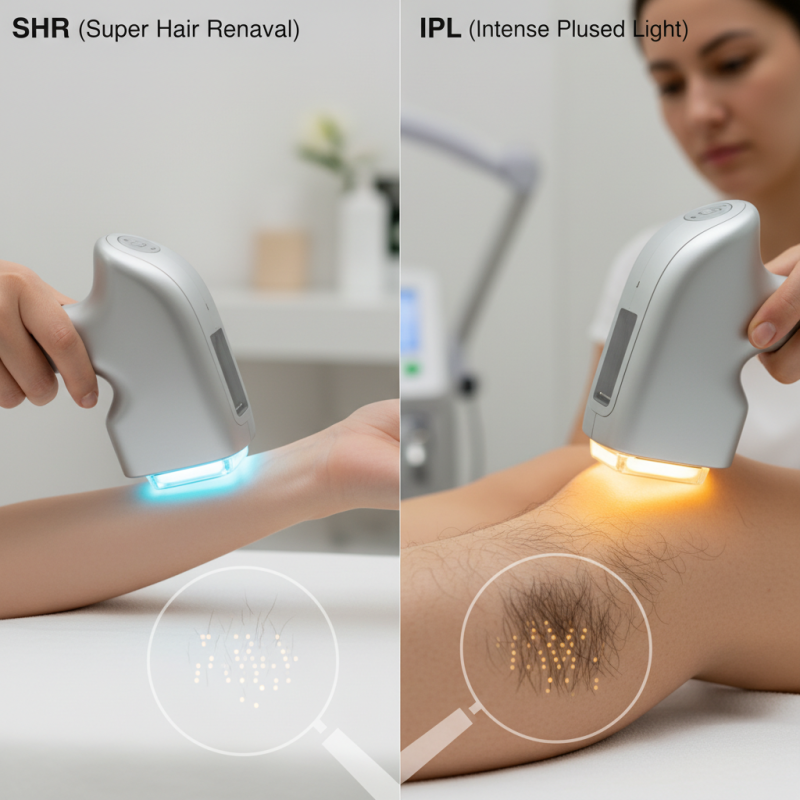
When considering hair removal options, the choice between SHR and IPL is crucial. Understanding the SHR vs IPL differences can significantly impact your results. Both methods have unique characteristics, appealing to different skin types and hair textures.
SHR, or Super Hair Removal, employs low energy but delivers pulses at a rapid rate. This technique is known for its comfortable experience, making it ideal for sensitive areas. On the other hand, IPL, or Intense Pulsed Light, uses high-intensity light for broader skin coverage, effectively targeting various hair colors, including lighter shades.
Evaluating the effectiveness and safety of these treatments is vital. Individual responses vary widely, and what works for one person may not suit another. Some may experience discomfort with IPL, while SHR may be less effective for coarse hair. Choosing the right option requires careful consideration of these factors.
Understanding SHR and IPL: The Basics of Hair Removal Technologies
SHR (Selective Hair Removal) and
IPL (Intense Pulsed Light) are two popular hair removal technologies.
Understanding their differences is crucial for making an informed choice.
SHR uses a low-energy light beam, which targets hair follicles gently.
It allows for a more comfortable experience with less risk of skin damage.
In contrast, IPL emits a broad spectrum of light that affects various skin layers.
This technique can be effective, but it may cause more discomfort.
When considering these treatments, individual factors matter.
Take into account your skin type and hair color.
SHR is generally better suited for darker hair on lighter skin.
IPL can work on various skin tones but may require more sessions.
Remember to consult with a qualified professional for personalized advice.
Tips: Always perform a patch test before starting any treatment.
This helps determine how your skin reacts to the technology.
Also, ensure you follow aftercare instructions diligently.
Proper care can enhance results and reduce side effects.
Don’t rush your decision; research and reflect on which method aligns best with your needs.
Every person's experience can differ.
Key Differences Between SHR and IPL Hair Removal Methods
When considering hair removal options, SHR and IPL are often compared. Both methods use light technology, but their approaches differ significantly.
SHR, or Super Hair Removal, operates at a lower energy level with a continuous wave. This provides a more comfortable experience, making it ideal for sensitive skin.
Studies show that SHR can achieve an overall hair reduction of up to 90% after several sessions.
On the other hand, IPL, or Intense Pulsed Light, uses a broad spectrum of wavelengths. While effective, it can be less precise.
According to industry reports, IPL typically offers about 70-80% hair reduction after multiple treatments. The varied wavelengths may sometimes affect skin tone differently, leading to inconsistent results for individuals with darker skin.
Furthermore, SHR is known for its speed. Treatments can be quicker compared to IPL. However, this doesn’t mean it’s suitable for everyone.
Those with light or fine hair may not see desired results with either method. Assessing each treatment's effectiveness requires an understanding of personal hair and skin types.
Results can vary greatly among individuals, calling for personalized consultation before committing.
Effectiveness of SHR vs IPL: Which Method Delivers Better Results?
When considering hair removal options, many individuals look at
SHR (Super Hair Removal) and
IPL (Intense Pulsed Light). Both methods come with unique features that can affect their effectiveness.
SHR uses lower energy levels and shorter pulses, making it suitable for various skin types.
It targets hair follicles with more precision, possibly leading to better results over time.
IPL, on the other hand, uses a wide spectrum of light. This makes it effective for
skin rejuvenation as well. However, it may not be as specialized in hair removal as SHR.
Some users find that IPL treatments require more sessions to achieve desired outcomes. The variations in hair thickness and color can also impact the success rates of each method.
Tips for choosing between SHR and IPL include evaluating your skin type and hair color.
SHR might work better for finer hair, while IPL can handle thicker hair.
Consulting with a trained professional is crucial to understand what will suit your needs. Keep in mind that results might vary;
consider doing a patch test if you’re uncertain. Reflect on previous hair removal experiences, and weigh your options carefully before deciding.
Safety and Side Effects: A Comparison of SHR and IPL Treatments
When considering hair removal treatments, safety and side effects are important. SHR (Super Hair Removal) and IPL (Intense Pulsed Light) each have distinct characteristics. Both methods target hair follicles but with different technology. SHR uses low energy levels with rapid pulses. This can minimize discomfort during treatment. In contrast, IPL employs high-intensity light. It can be more painful but often sees quicker results.
Safety varies between the two treatments. SHR is generally considered safer for all skin types. The gradual energy delivery reduces the risk of burns. IPL might cause more side effects, like redness or swelling. It requires careful skin type assessment before use. Clients with darker skin may experience pigmentation issues. Those considering these treatments should consult a healthcare professional for personalized advice.
Reflecting on personal experiences, some may still find drawbacks in both techniques. Not everyone experiences the same level of effectiveness. Some users might require multiple sessions. Results can vary widely. It's crucial to weigh options and listen to professional guidance. Each treatment has its benefits and limitations. Choosing the right one involves understanding personal skin needs and expectations.
SHR vs IPL Differences Which Hair Removal Treatment is Best?
| Criteria |
SHR |
IPL |
| Technology Type |
Optimal Pulse Technology |
Intense Pulsed Light |
| Pain Level |
Minimal discomfort |
Moderate discomfort |
| Skin Types Treated |
All skin types |
Primarily lighter skin types |
| Treatment Speed |
Faster sessions |
Slower sessions |
| Effectiveness |
Effective on fine hair |
Effective on coarse hair |
| Side Effects |
Redness, swelling |
Redness, hyperpigmentation |
| Number of Sessions Required |
4-10 sessions |
6-12 sessions |
Cost Analysis: SHR vs IPL Hair Removal – Which is More Affordable?
When considering hair removal treatments like SHR and IPL, cost is a significant factor. According to a 2023 report by the American Society of Plastic Surgeons, the average price for single IPL sessions varies between $100 to $300. In contrast, SHR sessions typically range from $75 to $150. This suggests that SHR could be a more budget-friendly option for those seeking effective hair removal.
However, it’s crucial to consider the overall investment. SHR often requires fewer sessions than IPL, potentially leading to lower treatment costs over time. A study published in the Journal of Cosmetic Dermatology found that patients using SHR experienced faster results, needing approximately 5 to 6 sessions for optimal hair reduction compared to 6 to 8 for IPL. Therefore, while the upfront cost of SHR may seem higher, the long-term savings can be significant.
Tip: Always inquire about package deals. Many clinics offer discounts for multiple sessions upfront. This can often lead to additional savings, especially if you plan on long-term hair removal.
Another aspect to consider is the effectiveness of each method on various skin types. Reports show that IPL might not be as effective for darker skin tones, while SHR is designed to work well across a wider range of skin tones. It's essential to have a personalized consultation to understand what’s best for you.
Tip: Research and read reviews about the clinics. Look for those with certified professionals and good track records. This can prevent wasting money on ineffective treatments.
FAQS
: SHR uses lower energy levels and is more precise for hair follicles. IPL has a wider light spectrum but is less specialized.
SHR sessions range from $75 to $150, while IPL costs between $100 to $300. SHR may save money in the long run due to fewer sessions.
SHR usually needs 5 to 6 sessions, while IPL often requires 6 to 8 sessions for optimal results.
Yes, SHR works well across a wider range of skin types, including finer hair.
SHR is better for finer hair, while IPL can handle thicker hair more effectively.
Evaluate your skin type, hair color, and previous experiences. Consulting a professional can help tailor the best option for you.
Packages may offer discounts for multiple sessions, potentially leading to overall cost savings for long-term hair removal needs.
IPL may not work as well on darker skin tones, while SHR is designed for a broader range of tones.
Yes, a patch test can help assess how your skin reacts to the chosen method, ensuring you make a safe decision.
It’s crucial to find certified professionals with good reviews to avoid wasting money on ineffective treatments.
Conclusion
The article "SHR vs IPL Differences: Which Hair Removal Treatment is Best?" explores the fundamental distinctions between two popular hair removal technologies: SHR (Super Hair Removal) and IPL (Intense Pulsed Light). It begins by providing a foundational understanding of each method, followed by a detailed comparison of their key differences, including treatment techniques and mechanisms. The effectiveness of both methods in delivering lasting results is also assessed, allowing readers to gauge which option may be more suitable for their needs.
Safety and potential side effects are critical considerations when choosing between SHR and IPL, and the article carefully evaluates these aspects for each treatment. Additionally, a cost analysis is presented to determine which method is more budget-friendly. Overall, the article aims to provide comprehensive insights into the SHR vs IPL differences, helping individuals make informed decisions regarding their hair removal options.
 Vasan Medicals