Vasan Medicals Vasan Medicals

China Top 10 Laser Machines Is Laser Treatment Worth It?

Time:2026-11-13 Author:Isabella
0%

Is laser treatment worth it? For manufacturers, the answer depends on the material, production goals, and the full cost of ownership. Here, “treatment” means industrial laser processing, such as cutting, marking, or engraving—not a medical procedure. A machine that cuts thin sheet quickly may struggle with thick plate or reflective metals. The right choice starts with a real sample, not a glossy brochure.

Laser pioneer Theodore Maiman is often credited with the remark, “The laser is a solution looking for a problem.” It is a useful caution, not a buying verdict. A laser can bring clean edges, repeatable detail, and less tool contact. It can also require skilled operators, extraction systems, maintenance, and careful safety procedures. Small details matter. A missed service cost can change the calculation.

This China top 10 laser machines guide should help readers compare equipment by application, power, precision, support, and expected workload. Ask suppliers to process your own material and show the finished result. Check what the warranty covers, how quickly parts can arrive, and whether local training is available. Then compare the total cost with your current process. Some figures may look persuasive; others need closer checking. Worth it? Only when the machine solves a specific production problem reliably.
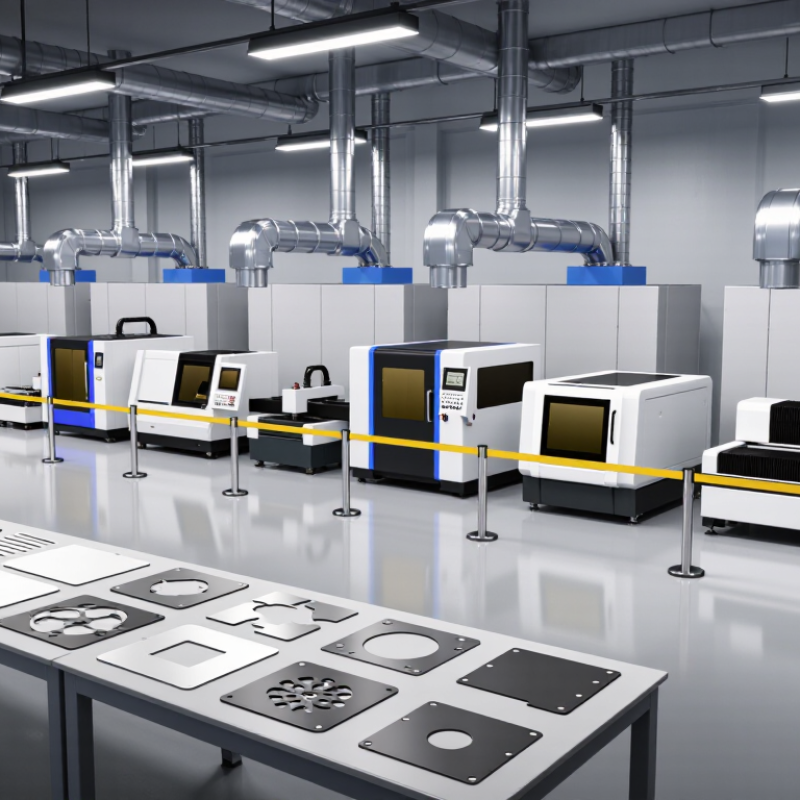
China Top 10 Laser Machines Is Laser Treatment Worth It?

How Laser Treatment Works and Where It Is Used

Laser treatment is not one procedure. It uses concentrated light at selected wavelengths to heat or remove specific targets in tissue. Melanin absorbs some wavelengths, while blood vessels and water respond to others. In fractional resurfacing, tiny columns of skin are treated while surrounding tissue remains intact. That can support healing, but it does not make recovery instant. It is selective.

Clinicians use lasers for hair reduction, redness from visible vessels, pigment concerns, and skin resurfacing. The right device and settings depend on the target, skin tone, treatment area, and medical history. The American Society of Plastic Surgeons’ 2023 procedural statistics reported about 3.2 million skin-resurfacing procedures in the United States. That category is not laser-only, so the figure should not be mistaken for a count of laser treatments. Risks can include temporary redness, swelling, pigment changes, or burns; protective eyewear and careful assessment matter. Results vary. A patch test may help assess response, though it cannot guarantee an outcome.

Major Types of Laser Machines Made in China

Chinese-made laser machines cover several distinct technologies, and the right choice depends on the material and task. Fiber laser machines are commonly used to cut, mark, or weld metals. They suit jobs such as trimming stainless-steel sheet or marking serial numbers on metal parts. Cutting results still depend on power, lens condition, gas settings, and material thickness.

CO2 machines are often selected for non-metal materials, including wood, acrylic, and some fabrics. A workshop might use one to engrave a wooden panel or cut acrylic signs. UV laser machines produce fine marks on selected plastics and electronic components, where heat-sensitive surfaces need careful handling. Compact diode machines can serve lighter engraving work, but their speed and cutting depth may be limited. It depends.

Laser treatment is a different category from industrial cutting and engraving. Medical and aesthetic devices use specific wavelengths and protocols, so suitability should be assessed by a qualified clinician rather than inferred from a machine’s label. Specifications can look tidy on paper; real workshops are less tidy. Before buying, check sample results on your own material, service availability, safety features, and operating costs—not just the advertised wattage. Not always. A higher-power machine is not automatically the better fit.

Major Laser Machine Types and Common Wavelengths

Representative wavelengths for commonly used laser machine types. Wavelengths are shown on a logarithmic scale because they span a wide range.

Is laser treatment worth it? That depends on the application, material, and required result. Wavelength is one factor in choosing a machine; it does not by itself indicate treatment effectiveness or quality. Actual specifications can vary by model and configuration.

Ten Notable Chinese Laser Machine Manufacturers

China’s laser-machine sector is worth judging by engineering depth, not catalog size. The ten notable manufacturers in this market span fiber cutting, welding, marking, engraving, and precision micromachining. Their machines may look similar in a showroom. The differences emerge in beam stability, motion accuracy, extraction design, and service response. A clean test cut is useful, but it does not prove reliable performance across a full shift.

Industry data gives useful context, though it is not a direct ranking of laser makers. The International Federation of Robotics reported 290,258 industrial robots installed in China in 2022, representing 52% of global installations. Grand View Research estimated the global laser processing market at about $22.3 billion in 2023. These figures point to a large automation ecosystem and rising demand, not guaranteed machine quality. Ask suppliers for cutting samples using your actual material and thickness. Check edge roughness, kerf width, cycle time, and assist-gas use. Request service-response terms in writing. Small details matter.

Treatment worth it? For a factory, laser processing can reduce tool changes and handle intricate contours. Yet thin sheet and reflective materials need careful trials. I would compare at least three of the ten manufacturers using the same file and operating settings. That is slower. It is also more honest than trusting a polished brochure.

Benefits, Risks, and Factors That Affect Treatment Results

Laser treatment can soften wrinkles, sun spots, acne scars, or unwanted hair, depending on the procedure. The American Society of Plastic Surgeons’ 2023 procedural statistics report roughly 3.3 million laser skin-resurfacing procedures in the United States. Popularity, however, does not guarantee suitability. Results depend on the device, treatment settings, skin tone, condition being treated, and the clinician’s experience. Some people need several sessions; redness and swelling can last for days.

Risks include burns, infection, scarring, and changes in skin color. The U.S. Food and Drug Administration advises that energy-based devices can cause injury, particularly when used improperly. Darker skin tones may be more prone to pigment changes with some laser types, so ask how the device and settings suit your skin. I would not treat a quick consultation as enough; request a review of your medical history, medications, and recent tanning. Results vary. That part is easy to underestimate.

Tips: Ask who will perform the procedure and what training they have. Get clear aftercare instructions, including sun protection. Ask to see realistic before-and-after examples for your skin type, and discuss likely downtime, total cost, and what happens if complications occur. If the promised result sounds certain, pause and ask more questions.

China Top 10 Laser Machines Is Laser Treatment Worth It? - Benefits, Risks, and Factors That Affect Treatment Results

Laser Type Common Uses Potential Benefits Typical Treatment Course and Recovery Important Risks and Limitations Factors That Affect Results
Ablative fractional CO₂ laser Resurfacing for certain acne scars, wrinkles, and sun-damaged skin Can improve skin texture and selected scars by treating microscopic zones while leaving surrounding skin intact. Often performed as one or a small number of treatments. Healing commonly takes about one to two weeks; redness may last longer. Risks include infection, prolonged redness, scarring, and temporary or persistent changes in skin color. More intensive settings generally involve more downtime. Scar type and depth, treatment settings, skin tone, aftercare, sun exposure, and the clinician’s experience.
Er:YAG ablative laser Resurfacing of selected superficial wrinkles, scars, and uneven skin texture Can remove thin layers of skin with less residual heat than CO₂ resurfacing in some settings. Recovery varies with treatment depth; lighter treatments may heal within several days, while deeper treatments take longer. Possible effects include redness, swelling, infection, scarring, and pigment changes. It may be less suitable for deeper concerns when a more intensive approach is needed. Depth and area treated, skin characteristics, medical history, sun exposure, and wound care.
Non-ablative fractional laser (approximately 1540–1550 nm) Selected acne scars, fine lines, and uneven skin texture Stimulates skin remodeling without removing the outer skin surface across the whole treatment area. Usually requires a series of sessions. Redness and mild swelling often settle within a few days, but schedules vary. May cause burns, blistering, infection, or temporary pigment changes. Improvements are usually gradual and may be modest for deep scars. Number and spacing of sessions, scar characteristics, energy settings, skin tone, and consistent sun protection.
Fractional thulium laser (approximately 1927 nm) Selected superficial pigmentation and sun-related changes May help improve the appearance of some superficial discoloration and uneven skin tone. One or more sessions may be used. Temporary redness, dryness, or a rough, flaky appearance can occur during healing. Pigment can darken temporarily; burns, irritation, and post-inflammatory hyperpigmentation are possible. It does not treat every cause of pigmentation. Correct diagnosis of the pigmentation, skin tone, settings, sun exposure, and use of appropriate aftercare.
Pulsed-dye laser (commonly 585–595 nm) Selected superficial vascular lesions, facial redness, and some scars Targets hemoglobin in blood vessels and may reduce the visible appearance of certain vascular conditions. Several sessions may be needed. Temporary redness, swelling, or bruising can occur; bruising may last longer depending on settings. Possible risks include bruising, blistering, pigment changes, and incomplete response. It is not appropriate for every type of redness or lesion. Lesion type, vessel depth, treatment settings, number of sessions, and the individual’s skin and medical history.
KTP laser (532 nm) Selected superficial blood vessels and some superficial pigmented lesions Can target certain small, superficial structures; suitability depends on the exact condition being treated. Recovery is generally limited, but redness or swelling may occur. Some concerns require repeat treatment. Because this wavelength is absorbed by epidermal melanin, burns and pigment changes are important considerations, particularly in darker skin tones or tanned skin. Lesion depth and diagnosis, skin tone, recent tanning, settings, and the practitioner’s assessment.
Long-pulsed Nd:YAG laser (1064 nm) Hair reduction and selected deeper vascular targets The longer wavelength can reach deeper targets and is often considered for hair reduction in darker skin types when used by a trained professional. Hair reduction usually requires multiple sessions because hair grows in cycles. Temporary redness or swelling around follicles can occur. Burns, blistering, scarring, and light or dark marks are possible. Eye protection is essential, and results vary by hair and skin characteristics. Hair color and thickness, growth cycle, skin tone, settings, treatment interval, and hormonal factors.
Alexandrite laser (755 nm) Hair reduction, particularly for suitable lighter skin tones with dark hair Can provide long-term reduction in hair growth after a course of treatments; it does not guarantee permanent removal. Multiple sessions are typically needed, with intervals based on the body area and hair-growth cycle. Mild redness or swelling may follow treatment. Burns and pigment changes are more likely if the skin is dark or tanned or if settings are unsuitable. It is less effective on white, gray, blond, or red hair. Contrast between hair and skin color, hair thickness, treatment area, session timing, and operator-selected settings.
Diode laser (commonly around 800–810 nm) Hair reduction on various body areas Can reduce hair growth over a series of treatments when the hair contains enough pigment to absorb the laser energy. Several sessions are usually needed. Short-lived redness or perifollicular swelling is common; exact recovery depends on treatment settings. Possible risks include burns, blisters, and pigment changes. It generally works poorly on very light, gray, or white hair. Hair pigment and thickness, skin tone, recent tanning, body area, session schedule, and appropriate cooling and settings.
Q-switched or picosecond pigment laser Selected tattoos and certain benign pigmented lesions Delivers short pulses that can fragment pigment; tattoo fading often requires multiple sessions and may remain incomplete. Several treatments may be spaced weeks or longer apart. Temporary whitening, redness, swelling, or small crusts can occur. Risks include burns, scarring, infection, and lighter or darker skin patches. Some tattoo colors respond poorly, and certain lesions must be medically assessed before treatment. Pigment or ink color and depth, tattoo age and composition, skin tone, treatment intervals, and the diagnosis of the lesion.

Is laser treatment worth it? It may be worthwhile when the treatment matches a clearly diagnosed concern and the expected benefits outweigh the cost, time, and risks for the individual. Results are not guaranteed and vary by treatment type, skin characteristics, practitioner, and aftercare. A qualified medical professional should assess the concern, discuss alternatives, and explain likely outcomes and risks before treatment.

How to Decide Whether Laser Treatment Is Worth It

How to Decide Whether Laser Treatment Is Worth It

Laser treatment may be worth considering when it targets a specific concern, such as uneven pigmentation, acne scars, or fine lines. The American Society of Plastic Surgeons’ 2023 Plastic Surgery Statistics Report recorded roughly 3.1 million laser skin-resurfacing procedures in the United States. That figure shows demand, not guaranteed results. Your likely benefit depends on the device, treatment settings, skin tone, and the clinician’s training. Ask what change is realistic for your skin, and request before-and-after examples from people with similar concerns.

Compare the full cost, not just the quoted session price. Some treatments need several visits, while redness or peeling may affect work and daily plans. Ask about recovery time, risks, and alternatives, including doing nothing. The U.S. Food and Drug Administration advises consumers to understand a device’s intended use and potential risks before treatment. That matters. A consultation should cover your medical history, medications, and tendency to develop dark marks or scars. If answers feel rushed, pause. A lower price is not a bargain if the treatment is unsuitable, and no responsible provider can promise perfect results. Decide only when the expected improvement feels worth the cost, time, and uncertainty.

FAQS

Which materials suit fiber laser machines?

Fiber machines commonly cut, mark, or weld metals. They can trim stainless-steel sheets or mark serial numbers. Settings matter.

What are CO2 lasers commonly used for?

CO2 machines often engrave wood, cut acrylic, or process some fabrics. Test the exact material before starting a large job.

When might a UV or diode laser be useful?

UV lasers can make fine marks on selected plastics and electronic parts. Compact diode machines suit lighter engraving, but cutting depth may be limited. It depends.

Does higher machine power always mean better results?

No. Lens condition, material thickness, gas settings, and the task all affect results. A larger number can be misleading.

Are industrial lasers the same as treatment devices?

No. Medical and aesthetic devices use specific wavelengths and procedures. A qualified clinician should assess whether treatment suits you.

What can laser skin treatment address?

Depending on the procedure, it may soften wrinkles, sun spots, acne scars, or unwanted hair. Some people need several sessions. Results vary.

What risks and downtime should I ask about?

Burns, infection, scarring, and skin-color changes are possible. Redness or swelling may last several days. Darker skin may face higher pigment-change risks with some laser types.

What should I check before treatment?

Ask who will perform it, their training, and how the settings suit your skin. Discuss your medical history, medications, recent tanning, aftercare, costs, and possible complications. A quick consultation may not be enough.

Conclusion

Laser treatment uses concentrated light energy to target or process specific materials and tissues with precision. Depending on the equipment and purpose, laser machines may be used in fields such as manufacturing, skin care, and medical procedures. Chinese-made systems span several categories, including cutting, engraving, welding, cleaning, and treatment devices. Comparing leading manufacturers means looking beyond rankings to assess machine performance, quality control, technical support, and suitability for the intended application.

Whether laser treatment is beneficial depends on the goal, the equipment, the operator’s training, and the individual or material being treated. Potential advantages include precision, efficiency, and reduced impact on surrounding areas, while possible drawbacks include discomfort, downtime, inconsistent results, or other risks. Before deciding “is laser treatment worth it,” consider the expected outcome, costs, safety measures, maintenance, and available alternatives. Seek qualified guidance for personal treatment decisions, and request clear specifications and service information when evaluating a machine.

Isabella

Isabella

Isabella is a dedicated marketing professional with a sharp focus on driving brand growth and engagement through strategic content creation. With an extensive background in digital marketing, she combines her passion for storytelling with her keen understanding of industry trends to deliver......